
By Faith Kemunto
Background
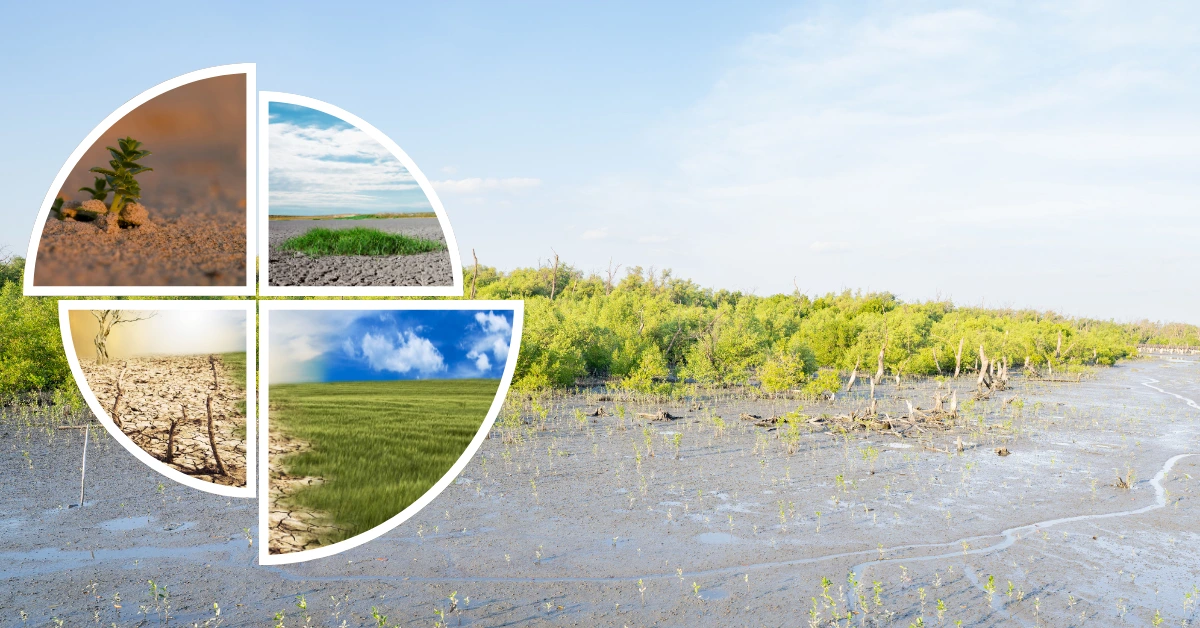
Nyamira County is a predominantly agricultural region where livelihoods are highly dependent on climate-sensitive natural resources. In recent years, communities have experienced prolonged droughts, erratic rainfall, soil degradation, crop failure, and declining water availability, intensifying food insecurity and poverty (Otwori et al., 2024). Smallholder farmers, particularly women, youth, and marginalized groups, are the most affected due to limited access to resources, adaptive technologies, and decision-making spaces. To address these challenges, the Government of Kenya introduced the Financing Locally Led Climate Action (FLLoCA) Program, a devolved climate finance mechanism designed to strengthen county and community capacity to plan and implement climate-resilient development initiatives (Olonde et al., 2025). In Nyamira County, FLLoCA has supported interventions such as climate-smart agriculture, water harvesting, soil conservation, and livelihood diversification. The program emphasizes community participation and integration of climate adaptation into county planning and budgeting processes.
Challenge
Despite FLLoCA’s strong design and growing implementation footprint, a critical gap existed in understanding how communities actually experience and perceive these interventions. Available evidence largely focused on implementation outputs, financial disbursements, and institutional processes, often presenting positive narratives without capturing lived realities (Coger et al., 2022). Community members had limited opportunities to express satisfaction or dissatisfaction with FLLoCA-supported projects. Power dynamics, fear of losing future benefits, and weak feedback mechanisms discouraged open dialogue. Additionally, the absence of baseline satisfaction indicators made it difficult to assess whether interventions were improving community resilience in ways that mattered to beneficiaries. Without community-centered evidence, decision-makers risked overlooking important lessons needed to strengthen relevance, equity, and sustainability of locally led climate action.
Intervention
To address this gap, I undertook a research initiative focused on assessing community satisfaction with FLLoCA-supported interventions in Nyamira County. The study intentionally shifted attention from what was delivered to how it was experienced by communities. Using a mixed-methods approach, the research engaged community members through structured surveys, focus group discussions, and key informant interviews. Participants included smallholder farmers, women, youth, persons with disabilities, and local leaders directly involved in or affected by FLLoCA-funded projects. This ensured that diverse perspectives informed the findings. Satisfaction was treated as a core evaluation variable, examining perceptions of project relevance, inclusivity, transparency, effectiveness, and sustainability. Local facilitators and leaders supported trust-building and ethical engagement, enabling more open and honest feedback. Beyond data collection, the research documented community-identified challenges, lessons learned, and practical recommendations. This approach bridged the gap between policy intentions and grassroots realities, providing actionable insights that could inform future FLLoCA planning, implementation, and learning processes.
Impact
The research has contributed to meaningful shifts in how FLLoCA interventions are understood, discussed, and assessed at the community and institutional levels.
For communities, the study created a safe platform for expressing experiences and expectations regarding FLLoCA-supported projects. Community members reported feeling heard and valued, with increased confidence to engage in discussions about what works, what does not, and why. As one smallholder farmer noted:
“For the first time, we are asked whether these projects actually help us cope with climate challenges, not just whether they were completed.”
This marked a shift from passive participation to active reflection and voice.
For county stakeholders, the findings introduced beneficiary satisfaction as a critical dimension of program success. Evidence from the research helped distinguish between projects that were implemented successfully on paper and those that genuinely addressed community priorities. A county technical officer reflected:
“The feedback showed us gaps we would not see from reports alone. It has changed how we think about measuring success.”
The research also strengthened learning and accountability by demonstrating the importance of integrating qualitative community feedback alongside technical and financial indicators. It reinforced the idea that locally led climate action should be judged not only by outputs delivered, but by outcomes experienced. At a broader level, the study contributes to evolving practice around devolved climate finance in Kenya. By centering community voice, it supports more adaptive, equitable, and people-centered approaches to climate resilience building in Nyamira County and similar contexts.
Conclusion
This change journey demonstrates that effective climate action is defined not only by what is implemented, but by how it is experienced by communities. By centering community satisfaction within FLLoCA interventions, the research helped shift attention from outputs and compliance to lived outcomes, voice, and accountability. The most significant change achieved is the recognition of beneficiary perspectives as essential evidence for understanding impact and improving locally led climate action. Key lessons emerged from this process. First, community-centred feedback creates space for more honest learning and adaptive decision-making. Second, satisfaction data complements technical and financial indicators, strengthening equity and relevance. Finally, trust and inclusivity are critical for meaningful participation. Looking ahead, sustaining these results requires institutionalizing community feedback mechanisms within FLLoCA planning, monitoring, and evaluation processes. Future efforts can build on this work by tracking satisfaction over time, scaling successful practices, and ensuring that community voices continue to inform climate-resilient development in Nyamira County and beyond.
References
Coger, T., Dinshaw, A., Tye, S., Kratzer, B., Aung, M. T., Cunningham, E., … & Carthy, A. (2022). Locally led adaptation: From principles to practice. World Resources Institute: Washington, DC, USA.
Olonde, J., Nicholas, O., & Kituku, W. (2025). Climate Change Actors and Their Capacity-Building Roles Under Climate Change Law. Available at SSRN 5683062.
Otwori, D. O., Mugalavai, E. M., & China, S. S. (2024). Influence of Climate Variability on Food Security in Nyamira County, Kenya. Journal of the Kenya National Commission for UNESCO, 5(1).