
Author: Pauline Soy, Communications Specialist, The ACTS AI Institute
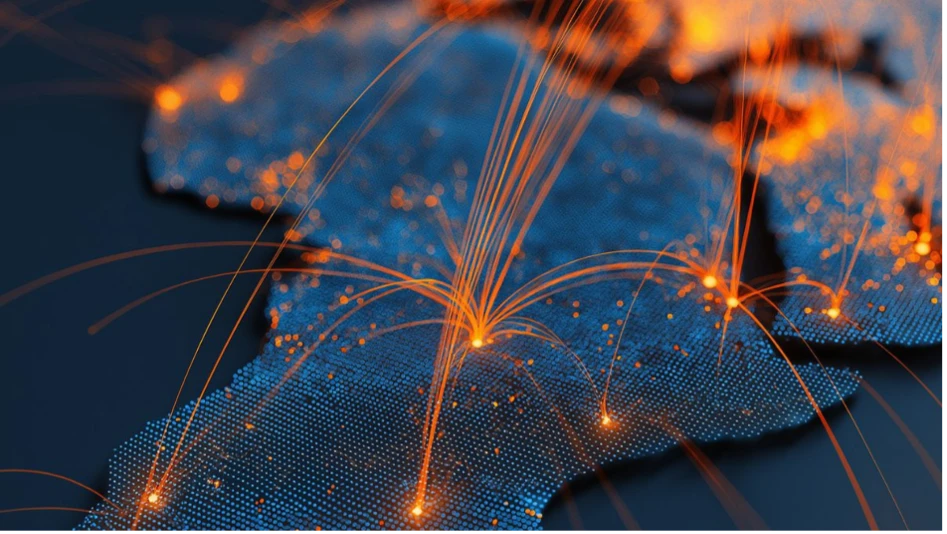
The global technology tells the story of the internet as a gift that connected the unconnected, democratised knowledge, and gave voice to the voiceless. The free flow of data across borders is presented as the infrastructure of human progress, and any government that interrupts it is either authoritarian or ignorant. It is also, for Africa and much of the Global South, a story told exclusively from the perspective that most benefits from others believing it.
The uncomfortable reality is that data has never been free, it has been extracted. The digital economy concentrate the gains in a small number of companies, seated in a small number of countries, operating under legal regimes designed by and for the world’s wealthiest economies. Digital sovereignty, therefore, is not a retreat from globalisation, but a long-overdue reckoning with what globalisation actually did.
How extraction became infrastructure
The intellectual roots of digital sovereignty go back to the oldest questions of who governs whom, and on whose terms. However, earliest traceable academic treatment appeared in 2006, in a journal article by Bernard Benhamou and Laurent Sorbier, which began probing what sovereignty could even mean in networked digital environments.
To understand why digital sovereignty is a corrective measure, it is necessary to go back further than most technology policy debates are willing to go. Africa was methodically underdeveloped, stripped of the productive capacity, institutional autonomy, and terms-of-trade advantages that would have allowed its economies to industrialise on their own terms. Colonialism built its institutions to extract, and those institutions, currently adjusted to suit the language of the twenty-first century, are still largely running.
The digital economy accelerated this design. When global technology platforms arrived in African markets in the 2000s and 2010s, they found that the regulatory environments were either absent or modelled on frameworks developed for other economies. They found populations whose digital activity generated data that was immediately valuable, immediately harvested, and immediately exported to servers in outside the continent. This data gets processed, packaged, and monetised without providing meaningful share of the value to the country of origin.
Data colonialism, therefore, is a mechanism within a larger system of extraction that has been running, under various names, and the legal architecture that enabled this was not neutral. The US CLOUD Act of 2018 allows American authorities to compel technology companies to produce data stored anywhere in the world, regardless of local law. The OECD’s frameworks for taxing the digital economy were written by wealthy nations, for wealthy nations, as Africa and other Global South countries did not have a seat at the table.
The missing beneficiaries
Consider what Africa has contributed to the global digital economy, and what it has received in return. The continent is home to over 1.4 billion people, which is roughly eighteen percent of the world’s population. It is also the fastest-growing mobile internet market on earth. African users generate large quantities of the data on which global AI systems are trained. And yet, as of 2025, Africa hosts fewer than 250 data centres across its 55 countries, compared to thousands in the United States alone.
When a Kenyan farmer’s cropping patterns train a global AI model, or a Ghanaian patient’s health data shapes a drug sold back to Ghana at prices Ghana cannot afford, no share of that value returns to the person or the country that generated it. These are the operation of a system whose terms were set by those with the most structural power, when the rest of the world were rebuilding from colonialism.
The African Declaration on Artificial Intelligence, adopted in Kigali in April 2025 named this explicitly: Africa must be a creator of AI, not merely its consumer. That declaration is the minimum condition for technological participation on terms that serve African people.
The critics of digital sovereignty argue that sovereignty claims can shield governments from citizens. Some states have invoked digital sovereignty as an excuse for internet shutdowns and surveillance of opposition. This danger is real. But the answer to bad implementations is not to abandon the principle, but to insist on proper understanding and implementation of digital sovereignty. The test is not whether a government controls data flows, but whether citizens benefit from and have rights within that control.
The African Union’s Data Policy Framework endorses data sovereignty as a continental principle while explicitly cautioning against crude localisation requirements that serve state control over citizen protection. The framework calls for cross-border data flows governed by mutual recognition of protection standards, for independent regulatory authorities with genuine investigative powers, and for African governments to treat data as a development resource whose benefits must visibly reach African communities.
Kenya’s High Court demonstrated the same logic in 2023, when it ordered the suspension of Worldcoin’s iris-scan campaign and directed deletion of biometric data gathered without adequate legal basis.
The window, and what must happen in it
There is a window of opportunity for Africa on data sovereignty. The infrastructure of the data economy is being built right now. The decisions that are made today about who owns this infrastructure, under what jurisdiction it sits, and on what terms it serves African populations will shape digital power relations.
Africa has more leverage in this moment, as the scalers need African markets and African data to train competitive AI in an era when data diversity is everything. That leverage will not automatically translate into good outcomes, but must be deliberately and collectively used. The Malabo Convention and the AfCFTA’s Digital Trade Protocol are the legal architecture for exercising that leverage collectively.
Digital sovereignty is not Africa turning its back on the world. It is Africa insisting, at last, on the terms of its own participation in it. It is justice, and it is precisely the corrective that several centuries of structured extraction make not just defensible, but necessary.