
By Faith Kemunto, Berit Lolo, Christabel Mukubwa, Joel Onyango
A Just Energy Transition: More Than Megawatts
Kenya’s clean energy leadership has become a global reference point. From the solar farms of Nakuru County to the wind turbines of Marsabit. But at the heart of the National Policy Dialogue on Just Energy Transitions (JET), hosted by the African Centre for Technology Studies (ACTS), one message stood out:
“A just transition is not only an energy agenda, but also a development agenda.”
The dialogue comprised voices from government, academia, civil society, private sector, and development partners. Their shared focus on ensuring that Kenya’s clean energy journey is inclusive, empowers the community, and builds sustainable livelihoods.
Localizing Energy Solutions Builds Fair Futures
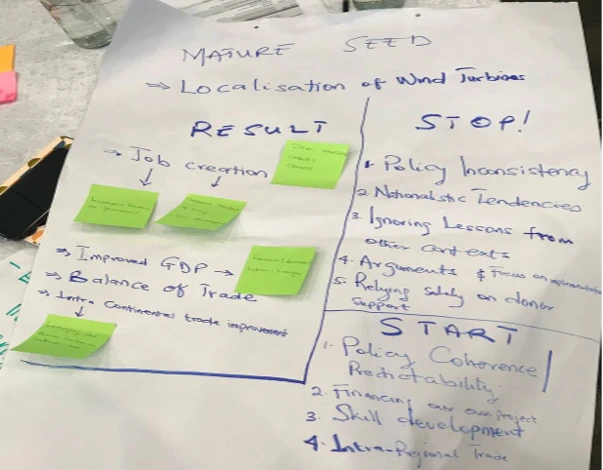
Localization of wind turbines illustration
For Kenya to achieve a truly just transition, local value creation should take center stage. Participants agreed that producing renewable energy technologies like solar batteries and wind turbines locally will generate jobs, strengthen supply chains, and retain more value within Kenya’s borders.
“If we only import solar and wind components, we remain consumers not co- creators of our future.”
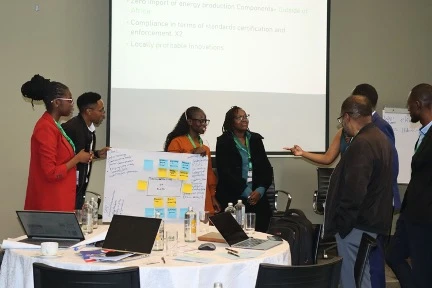
Participants discussing policies localization
Localization is not just about manufacturing. It also entails aligning global frameworks with Kenya’s own development priorities. Localizing policies ensures that international climate commitments translate into real, tangible benefits for Kenyan communities.
Inclusion and Equity Are Central to a Just Transition
Participants warned that Kenya risks being green but not equitable. This is if women, the marginalized, and SMEs are not fairly represented. Women remain underrepresented in technical and leadership roles, and data gaps make it difficult to measure progress. Meanwhile, SMMEs struggle to access financing and recognition in renewable markets.
“We cannot speak of fairness when women and youths are always left behind.”
A fair transition means equal participation. Ensuring that energy access leads to opportunities for all, especially marginalized groups. Investment in gender-specific data and inclusive training programs was emphasized as a priority.
Open Data Powers Accountability and Innovation
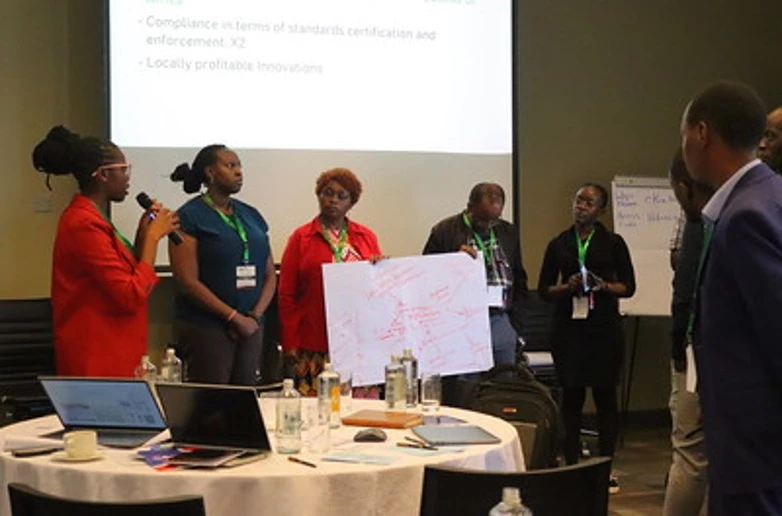
Participants discussing data democratization
Across the discussions, one recurring theme was data democratization. Energy data from generation to consumption should be transparent and accessible to all. This data empowers citizens, researchers, and entrepreneurs to innovate and hold institutions accountable.
“When data is shared, communities become active participants in shaping energy decisions”
Better access to reliable data can help identify energy gaps, guide investment, and drive evidence-based policies. Therefore, data is the new energy powering Kenya’s fair transition.
Regional Cooperation Strengthens Local Power
Participants also looked beyond Kenya’s borders. Regional collaboration through platforms like the African Continental Free Trade Area (AfCFTA), were identified as essential for building Africa’s renewable energy capacity. By harmonizing standards, promoting cross-border manufacturing, and reducing dependency on imported components, African nations can lead a continental shift towards sustainable energy independence.
Looking Ahead: Powering Fair Futures Together
By the close of the dialogue, one shared vision emerged; a Kenya where renewable energy does more than light homes. Just Energy transition should fuel livelihoods and be just. Kenya’s just transition will not only be measured by the number of turbines erected, but also by how deeply it empowers its people, fosters innovation, and sustains inclusive growth.
“A fair energy future is one where every Kenyan from a basic solar technician to an engineer share in the power of change.”
With focused investment, aligned policies, and collaboration across sectors, Kenya can truly lead Africa toward a sustainable and fair energy future.
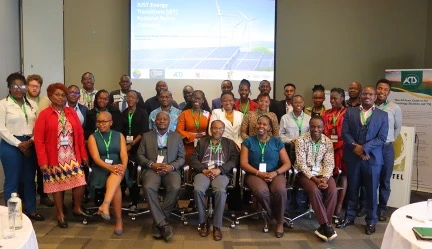
Participants at the Just Energy Transition National Policy Dialogue