
By Patience Mebo Ochieng, Peter Ongalo

When farmers work tirelessly from planting to harvest, why does a significant portion of their hard work still end up as post-harvest loss? For smallholder farmers, a weak, nutrient-starved crop spoils faster, has a shorter shelf life, and fails to meet strict market standards, directly leading to reduced income and food insecurity. This critical link between crop quality and post-harvest outcomes was the core of a recent stakeholder meeting at the Kinale Aggregation Hub in Kiambu, Kenya, which brought together lead farmers and extension officers. But what if the key to turning this around isn’t just better storage or transport—what if it begins deep in the soil beneath the fields?
This story reveals how crop fragility and vulnerability to pests and diseases are often exacerbated by underlying soil issues. These conditions can force farmers to rely heavily on pesticides, which then negatively affect food yield, quality, and safety. These interconnected challenges jeopardise harvests and threaten both farmer incomes and consumer well-being.
On September 19th, 2025, this question sparked lively discussions at the Kinale Aggregation Hub, where lead farmers, extension officers, and researchers from the African Centre for Technology Studies (ACTS) came together to rethink food cold chains and post-harvest management.
The discussion delved into four crucial evidence streams: detailed soil analysis, MRL testing on fresh produce, market demand analysis, and a review of agronomic best practices, all viewed through the lens of quality and safety.
Soil Health: The Hidden Foundation
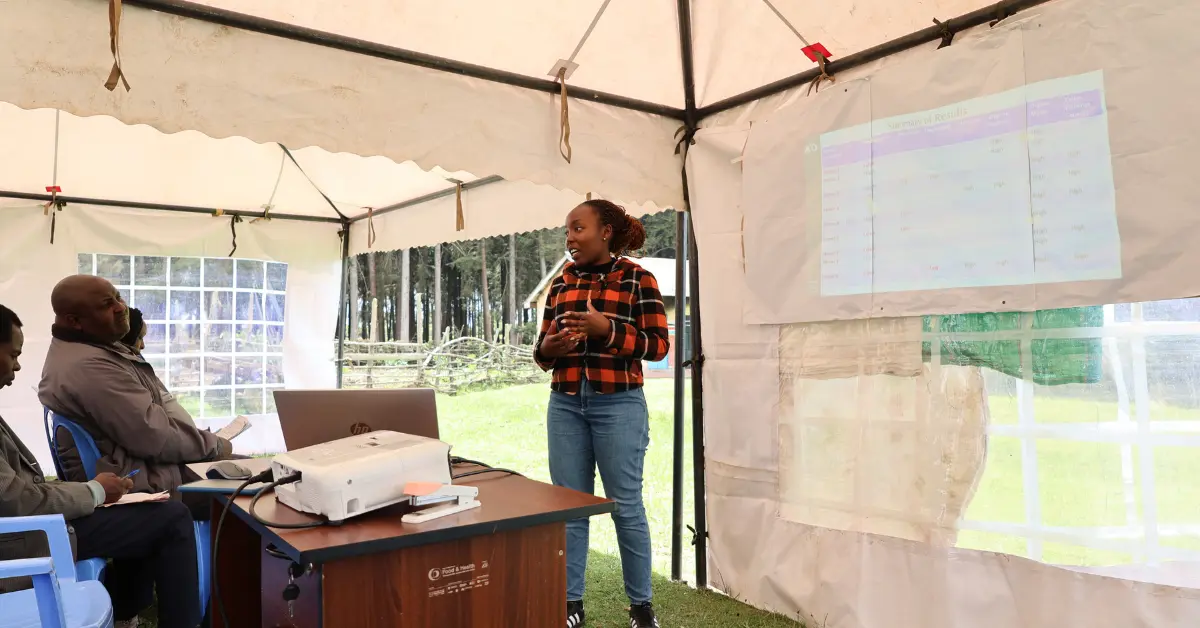
The potential to reduce post-harvest losses starts with understanding the very ground on which crops grow. Benson Karanja, a lead farmer at Lari Horticultural Farmers’ Cooperative Society Limited (LHFCSL), put it simply: “Soil testing is the key to healthy crops, lower costs, and sustainable farming.” When farmers understand their soil’s nutrient balance and health, they can apply fertilizers precisely—avoiding weak plants vulnerable to disease or damage that spoil quickly after harvest. Healthy, well-fed soil helps grow stronger crops with a longer shelf life.
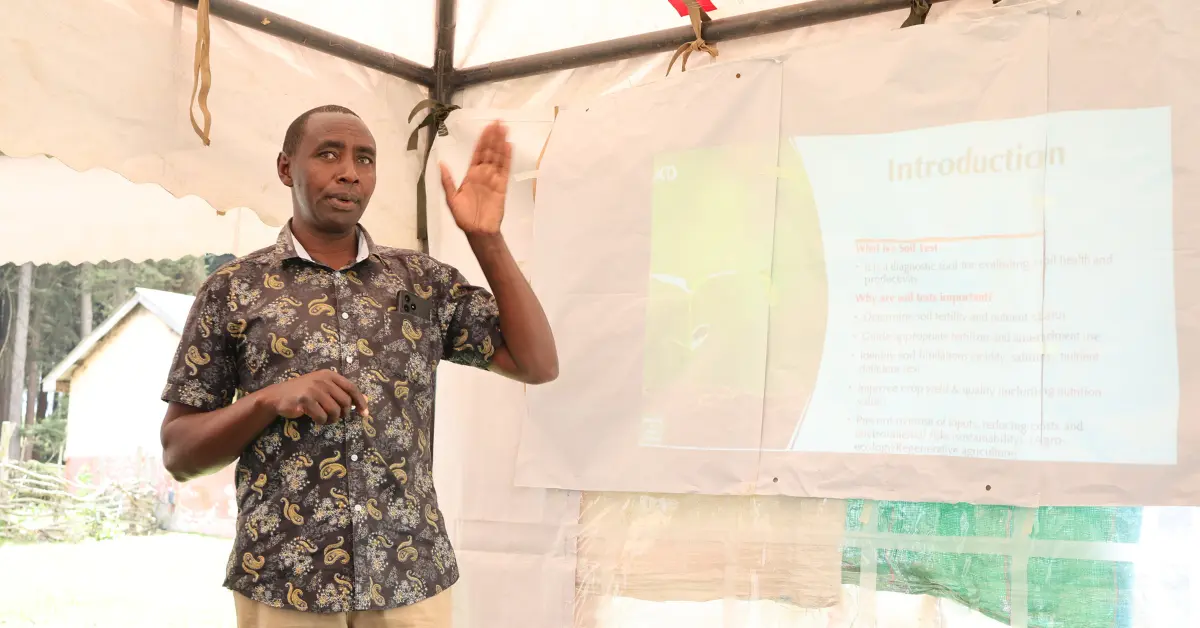
ACTS Research Assistant, Christine Ndiritu shared soil analyses from local farms which showed uneven nutrient management—some soils lacked vital phosphorus, risking lower yields and fragile produce, while others had too much, causing imbalance and waste. Yet, the soils were rich in organic matter, a hopeful sign of fertile ground ready for better care.
Farmers learned that a one-size-fits-all approach to fertilizer doesn’t work. Instead, promoting better practices involves showing how combining organic and inorganic inputs with smart techniques like mulching and crop rotation can optimize soil health, grow robust crops, and reduce losses after harvest.
© Peter Ongalo
Food Safety: The Market Gatekeeper
But soil and crop quality are just the start. Farmers also face strict food safety standards, especially when selling to premium or export markets. There was also a conversation that revealed worrying findings of banned pesticide residues in fresh produce—substances that put consumer health at risk and lead to immediate crop rejection.
This disconnect between farmer practices and market rules threatens not only health but also farmers’ livelihoods. The answer is better record-keeping, careful timing of pesticide use, and integrated pest management (IPM) methods that utilize crop rotation and biological controls instead of harmful chemicals. Through targeted training and peer learning, farmers are acquiring the knowledge to meet safety standards, secure market access, and dramatically cut post-harvest losses caused by rejection.
From Soil to Plate: A Whole-System Vision
The story of Kiambu farmers shows that reducing food loss and ensuring quality isn’t a siloed task, it connects soil health, crop management, and food safety in a continuous chain. Strengthening this chain with sustainable soil practices, proper post-harvest handling, and compliance with safety standards can improve incomes, build trust with buyers, and contribute to food security.
By starting from the soil, adopting science-backed farming methods, and embracing market-ready safety measures, smallholder farmers can turn their hard work into fresh, safe, and valuable food, nurturing resilience from the ground up.