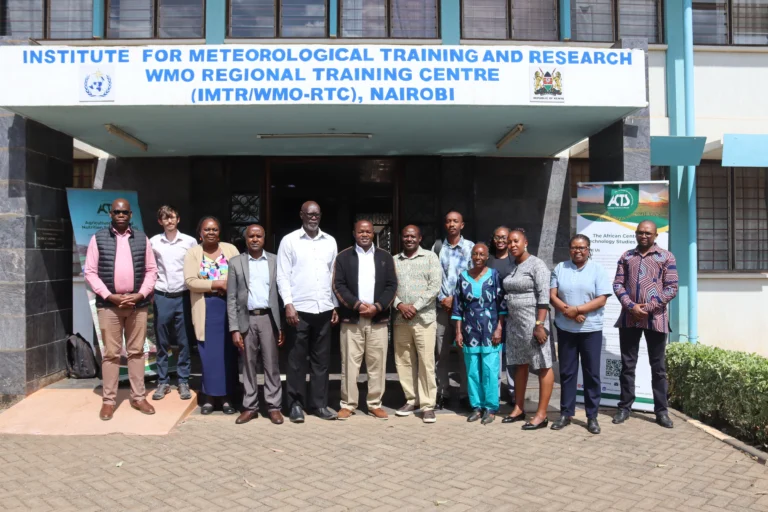

By Faith Kemunto, Ruth Wainaina
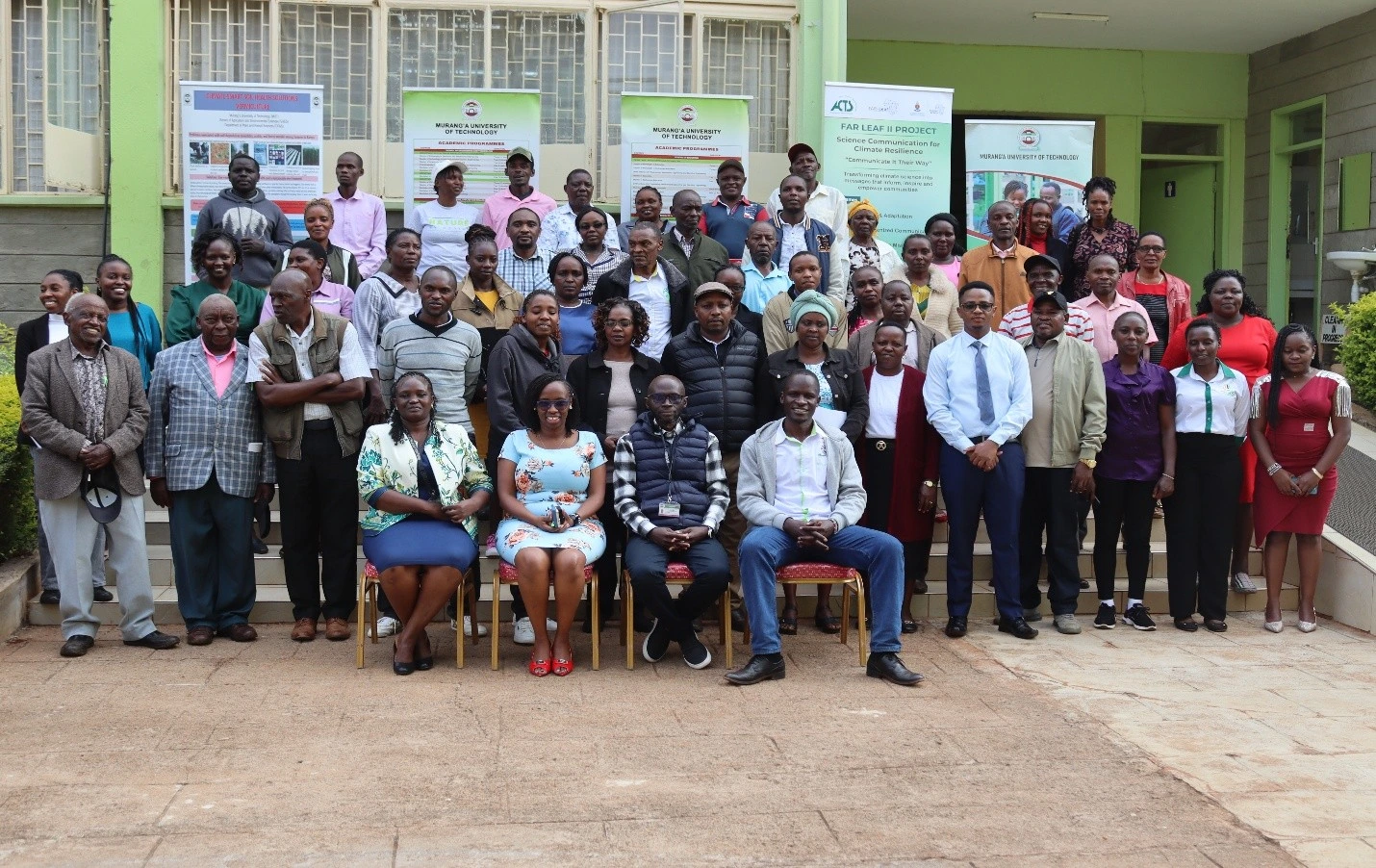
These realities formed the backdrop of a capacity-strengthening and dissemination workshop organised by the African Centre for Technology Studies (ACTS) under the FAR-LeaF II project. The workshop, Science Communication for Climate Resilience among Smallholder Farmers in Murang’a, was held on 31 July 2026 in partnership with Murang’a University. It brought together smallholder farmers, academics, government agricultural officers, researchers from the Kenya Agricultural and Livestock Research Organization (KALRO), students, youth representatives, cultural leaders and leaders of religious organisations.
Effective climate communication requires both sharing information and listening to communities. Farmers are not merely recipients of climate information but also holders of valuable knowledge about their environments. Their observations and experiences can help researchers and institutions understand changing climate risks and identify adaptation practices already being applied on the ground. Recognising and integrating these different knowledge perspectives is essential to making climate science locally relevant and actionable.
Understanding Climate Risks Across Murang’a
Murang’a County covers approximately 2,559 km² and has six agro-ecological zones, characterised by variations in altitude, temperature, rainfall and vegetation. The high-altitude areas bordering the Aberdares generally receive higher and more reliable rainfall, supporting dense vegetation, forests and intensive crop farming, including tea, coffee and dairy production. In contrast, the lower eastern parts of the county are relatively warmer and drier, with lower and more variable rainfall, supporting predominantly drought-tolerant crops and seasonal vegetation. These differences influence the types of crops farmers can grow, the availability of water, and the adaptation measures required across the county. Within different ecological regions, climate changes have not been similarly experienced. The work presented during the workshop mapped climate risk areas across Murang’a’s three almost similar ecological regions; Highlands, Midlands and Lowlands, highlighting the importance of understanding the particular conditions facing communities in different parts of the county. Climate risks vary across Murang’a’s Highlands, Midlands and Lowlands, requiring locally relevant responses.
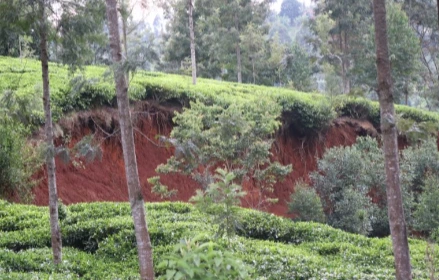
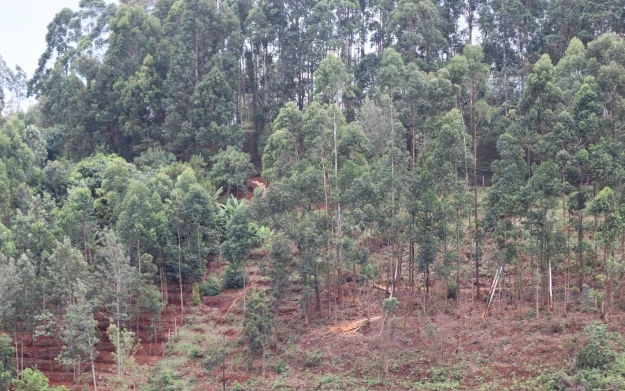
This geographical diversity is important because there is no single adaptation solution that can address all climate challenges. The risks faced by farmers, as well as the resources available to them, shape the ways in which communities respond. Looking at climate resilience through a local lens therefore makes it possible to move beyond broad climate messages and focus on what information and support farmers actually need.
Farmers’ Experiences and Existing Adaptation Practices
The workshop discussions sought to capture farmers’ experiences and understanding of climate change, the changes they have observed in their local environments, and the adaptation measures they are already applying to manage climate-related challenges. The discussions demonstrated that farmers are not simply waiting for external solutions. They are already responding to climate-related challenges through a range of practices adapted to their local environments. The adaptation practices identified during the discussions reflected the different environmental conditions and climate-related challenges experienced across Murang’a County. In the Highlands, where steep slopes and heavy rainfall contribute to soil erosion, mudslides and land instability, farmers highlighted terracing and the use of gabions to manage surface runoff, control erosion, and protect agricultural land. Farmer field schools also provided opportunities for sharing knowledge and strengthening local capacity to adopt climate-resilient farming practices.
In the Midlands, farmers reported using organic farming and agroecological approaches to improve soil health, maintain soil moisture, and diversify agricultural production. Zai pits, which involve digging small basins around planting areas to capture and retain rainwater, were also identified as a practical response to increasingly unreliable rainfall. In the Lowlands, where water scarcity and prolonged dry periods affect crop and livestock production, farmers identified irrigation as a means of sustaining crop production during dry spells. Other practices included establishing fishponds to diversify food sources and livelihoods, using alternative livestock feeds to address fodder shortages, and planting bananas and fruit trees to diversify agricultural production. Communities also emphasised awareness-raising and early warnings as important measures for communicating climate-related risks and strengthening preparedness.
These practices offer an important lesson: climate resilience is not built only through new technologies or externally designed interventions. It can also grow from knowledge and practices that communities are already developing and adapting. These community-level responses are consistent with adaptation measures identified in Murang’a County’s Climate Change Action Plan, which includes water harvesting, conservation agriculture, drought-tolerant and early maturing varieties, timely planting, fodder conservation, value-chain diversification and sustainable land-management practices.
Bridging the Gap Between Climate Information and Action
Despite these existing adaptation efforts, farmers continue to face challenges in accessing reliable, locally relevant climate information and the technical support needed to make informed decisions. Having climate information is not necessarily the same as being able to understand and use it. The workshop therefore explored the sources of climate information available to communities and identified misconceptions that can influence how climate risks are understood and addressed. These discussions highlighted the importance of communicating climate information in accessible, relevant, and actionable ways, while strengthening linkages between scientific knowledge and farmers lived experiences.
For a farmer, climate information becomes meaningful when it can help answer practical questions: When should I plant? How should I manage water? What risks should I prepare for? Which adaptation option is appropriate for my location? Effective climate science communication should therefore help bridge the gap between scientific knowledge and everyday decisions. Climate information is most valuable when communities can understand it and connect it to decisions about their livelihoods.
From Information to Practical Action
As climate risks continue to evolve, strengthening the connection between climate science and community knowledge will become increasingly important. The voices, experiences and innovations of smallholder farmers can help shape adaptation approaches that are not only scientifically informed but also grounded in local realities. In the end, climate resilience is not built through information alone. It is built when information is understood, trusted, shared, and transformed into action. For Murang’a’s smallholder farmers, the journey from climate information to climate action is therefore not about starting from scratch. Communities are already observing changes, identifying risks, and developing ways to respond. What is needed is stronger support to connect these local efforts with timely, understandable information that is relevant to their circumstances. The experience from Murang’a offers a broader lesson for climate resilience efforts: effective climate communication should not only inform communities but also enable them to act. This requires accessible approaches such as local-language radio programmes, community meetings, farmer field schools, mobile phone alerts, and engagement through trusted local leaders to ensure climate information is understood, relevant and actionable.