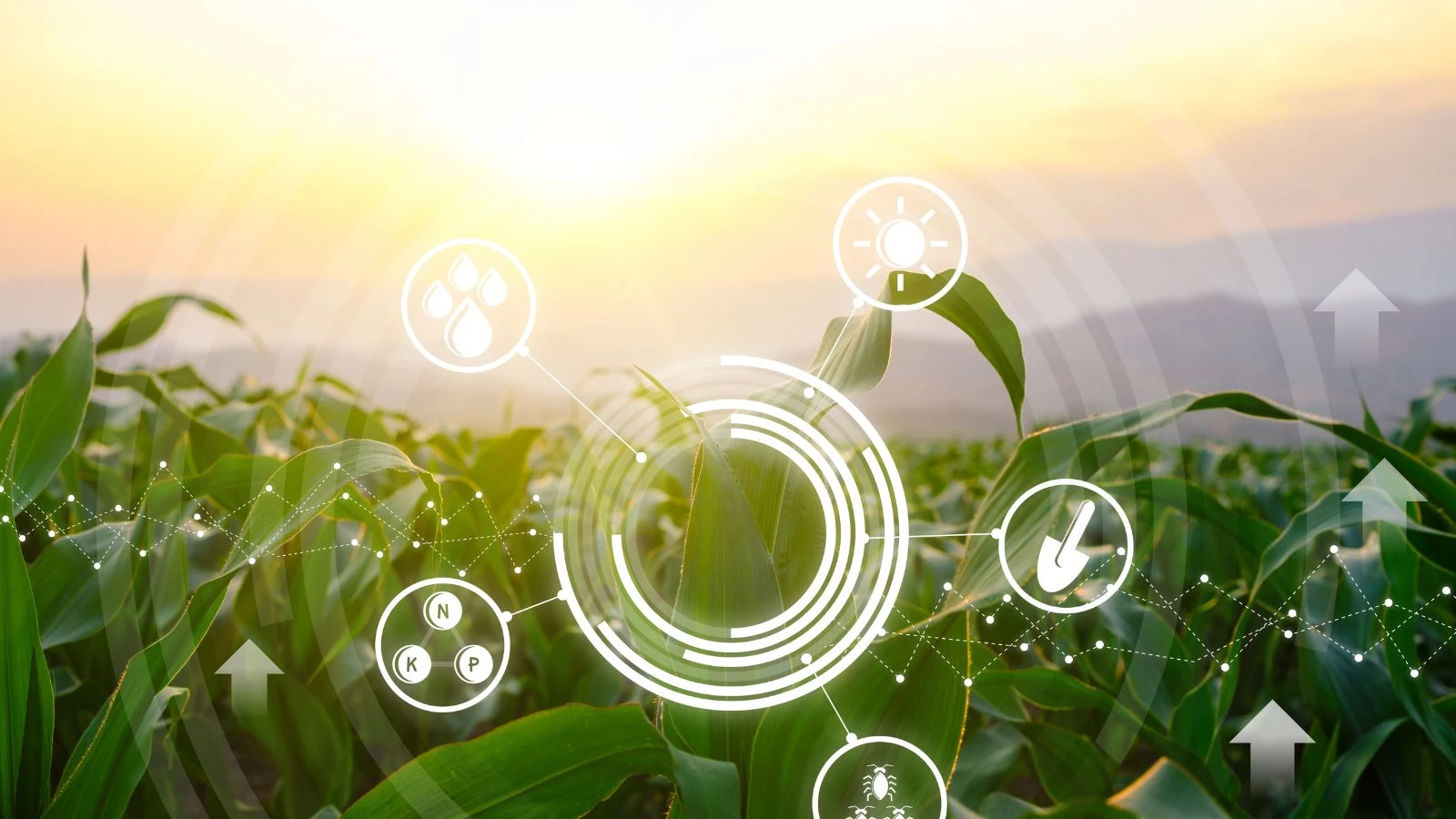
In Benin, as in much of West Africa, the difference between a good harvest and a failed one can hinge on decisions made weeks before the first rains arrive, such as what to plant, where, and in what quantities. For the smallholder farmers who make those decisions with limited information and no margin for error, the tools of modern agricultural science have largely remained out of reach.
Dr. Souand Tahi, a statistician and researcher at Biostatistics Department at theUniversity of Abomey-Calavi, Benin, has spent the better part of her career asking what AI and machine learning can reveal about the conditions that determine whether a crop survives or fails. Her route into artificial intelligence was a logical progression from a trained statistician who, working on real agricultural and environmental problems, kept encountering systems too complex for classical methods to hold.
A complexity that statistics alone could not hold
West Africa’s agricultural systems are, by any measurable standard, extraordinarily complex. Rainfall arrives in pulses that defy seasonal averages; smallholder plots are fragmented across microclimates; market access is uneven; and the data infrastructure such as digitized records, long-term satellite archives, standardized sensor networks is sparse, patchy, and often missing entirely.
Working on agricultural and environmental challenges specific to Benin and the broader sub-Saharan context, Dr Tahi found herself repeatedly encountering systems that traditional modelling could not adequately capture, such as non-linear interactions between climate variables and soil conditions, and feedback loops between rainfall patterns and crop productivity. This are the kind of layered, interacting pressures that classical modelling could describe but not adequately capture.
“Machine learning was an obvious tool, capable of capturing that complexity and producing concrete solutions. My commitment was built around a strong conviction: to use AI as a lever of transformation to respond to Africa’s development challenges,” she reflected.
The stakes behind the science
Maize is the crop that anchors household food security for millions of smallholder families such that poor yields compounds nutritional vulnerability, drives debt, and contributes to the rural-to-urban migration that is already straining Beninese cities. Hence the ability to predict yields with reasonable accuracy, and to understand what drives them, is a matter of practical urgency.
To address this, Dr Tahi She used the integrated climate data, satellite imagery, and data from experimental plots that she designed to developed machine learning models for maize yields. These models are capable of identifying the critical climate windows and agronomic parameters that most powerfully determine productivity. Her aim was to create tools that agricultural decision-makers and extension services could actually use.
In parallel, she applied her model to Benin’s coastal mangrove ecosystems. These ecosystems function as natural barriers against storm surges, support biodiversity, and sequester significant volumes of carbon. They however remain poorly monitored and chronically understudied. Her work applied machine learning to assess ecosystem health in environments where human observation is limited and where the consequences of degradation extend far beyond the immediate shoreline.
What the AI4D Scholarship made possible
The AI4D Africa Scholarship came at a critical point in her research. Beyond the financial support, it provided access to greenhouse facilities for controlled experimentation, specialist training in machine learning methods, and, perhaps most valuably, a continental network of African researchers working on adjacent problems with a shared understanding of what it means to do this work in African contexts.
Research in applied AI for development is frequently conducted in relative isolation, particularly for early-career researchers based outside major academic hubs. The AI4D programme created a cohort.
“The AI4D scholarship was a real turning point in my journey. It not only offered essential financial support, but above all a stimulating environment that is conducive to high-level research. Beyond the academic dimension, this scholarship also strengthened my confidence as a young African researcher, by showing me that my work could contribute to concrete transformations,” she reflected.
Early results and the road ahead
The models developed through this research have already begun to reach their audience. The findings, particularly the identification of key climate and agronomic variables driving maize productivity in Benin, have drawn consistent interest among agricultural researchers, and national and international practitioners.
Dr Tahi describes her long-term vision as a bridge between data science and the concrete needs of farming communities; and between predictive models and the decisions that actually get made in agricultural ministries, extension services, and rural households.
Her model can be adapted and scaled to inform early warning systems for food insecurity, decision support tools for smallholder farmers facing an increasingly volatile climate, and digital transformation pathways for Benin’s agricultural sector aligned with national development goals.
She has also mentored students through this process in an effort to transfer technical skills in data analysis and machine learning, and also as a way of approaching research that keeps the end user visible at every stage. Her advice to African AI and machine learning researchers is to stay rooted in local realities as the transformative potential of AI is only realised when it is directed at problems that are genuinely felt, by communities whose conditions shape what counts as a useful answer.
“I would tell them (African researchers) above all to remain anchored in local realities. AI offers immense possibilities, but its true impact depends on its capacity to respond to concrete problems.”