By Faith Kemunto, Berit Lolo, Winnie Wangwe
Background
A research internship is an important phase in life of a budding researcher. The internship experience is not only important to the individual in terms of learning but it also important in development and research programmes, bringing fresh perspectives, and new ways of doing that are relevant to the times. Many early career researchers (ECRs), however, struggle to translate their experiences and learning into significant outputs, limiting both their personal growth and the visibility of valuable insights from projects they are involved in. One way to counter this challenge is through exposure to co-creation activities such as write shops that focused on building manuscript writing skills.
Despite strong analytical skills and solid thematic grounding, many ECRs struggle to translate their work into coherent, well-structured manuscripts for suitable publication. The challenge is rarely about intelligence or technical knowledge. It is often about structure, clarity, logical flow, and understanding editorial expectations. Another significant challenge is limited exposure to journal standards and the realities of the publication process. Early-career researchers often lack practical guidance on selecting appropriate journals, understanding editorial expectations, navigating peer review, and avoiding predatory journals. Participants came from diverse academic backgrounds, resulting in uneven writing experience and confidence levels. Without structured support, these challenges can delay publication, weaken research impact, and diminish researchers’ confidence. There was a clear need for a practical, supportive intervention that could build writing capacity, strengthen confidence, and enable ECRs to communicate impact effectively. The write-shop was intentionally designed to confront these barriers in a focused, practical, and mentorship-driven environment
Intervention
African Centre of Technology Studies (ACTS) organizes write shops for early career researchers, providing them with dedicated time to work on manuscripts while receiving mentorship from experienced researchers. The write shops are therefore designed not only to improve technical writing but also to empower early-career researchers to recognize the value of their contributions. By providing a structured learning environment, the write shop aims to transform participants from task-focused assistants into confident knowledge contributors capable of documenting key learnings from research undertaken under various projects. The idea of a write shop is strongly aligned with Climate Resilient Economies (CRE) Prpgramme’s broader commitment to capacity strengthening, learning, and knowledge dissemination.
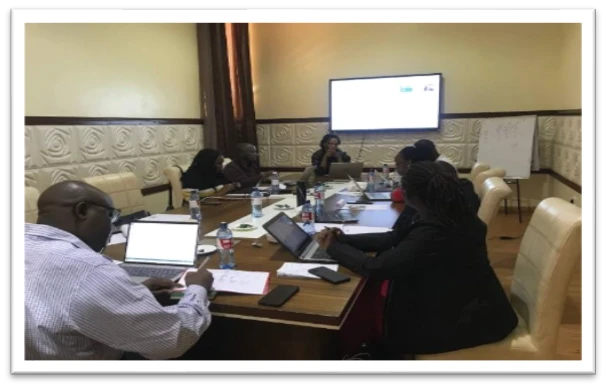
The CRE Programme responded by facilitating an interactive write shop for early-career researchers focused on manuscript writing and professional communication. The workshop combined guided instruction with hands-on practice, introducing ECRs to key components of a manuscript, including introduction and methods of development, organization of findings, and effective discussion of results. Facilitators shared practical examples of successful manuscripts, demonstrating how evidence and lived experiences can be communicated with clarity and impact. ECRs actively worked on their own drafts, receiving real-time feedback from mentors and peers. Group discussions encouraged reflection, knowledge sharing creating a safe and collaborative learning environment. The write shop also emphasized ethical writing, accuracy, and professionalism, reinforcing standards expected in research especially in the context of recent research trends such as AI and the ‘publish or perish’ culture that pervades research and higher learning institutions. By the end of the workshop, ECRs had reviewed draft manuscripts and clear pathways for refining and publishing their work.
In addition, the write shop strengthened participants’ presentation skills, highlighting the importance of clearly and confidently communicating research to diverse audiences, —an essential competency for any researcher. Sessions also emphasized critical thinking and the ability to formulate strong arguments within a manuscript by making the most effective use of available data and analyses, while situating findings within broader contributions to knowledge. Participants were also exposed to practical tools and strategies that can enhance the research and writing process, including efficient approaches to conducting literature reviews, organizing references, and developing sustainable writing habits. These insights helped participants not only improve individual manuscripts but also build long-term skills for rigorous research communication and scholarly productivity.
Impact
Three ECRs successfully developed full manuscript drafts that are now under review, demonstrating a shift from informal learning to professional knowledge production. ECRs who initially viewed writing as a barrier gained confidence in their ability to communicate ideas, document learning, and contribute meaningfully to research and development outputs.
Beyond technical writing skills, the write shop strengthened interns’ sense of agency and professional identity. Participants became more reflective and proactive in articulating the value of their field experiences and program contributions. The mentorship and peer-learning model fostered a supportive environment that enabled ECRs to learn from one another and receive constructive feedback, reinforcing confidence and motivation.
These outcomes have lasting implications for interns’ academic and professional trajectories. The ability to produce credible manuscript drafts equips ECRs with transferable skills essential for future careers in research, policy, and development practice. At the organizational level, the CRE Programme benefits from strengthened documentation, improved knowledge capture, and intern-led learning products. By investing in intern writing capacity, the programme not only transformed individual professional pathways but also enhanced its evidence base and learning culture.
Conclusion
The CRE internship write shop demonstrates how intentional capacity-building can generate meaningful human impact. By equipping ECRs with manuscript writing skills, the programme transformed confidence, professional identity, and future opportunities for emerging professionals. ECRs left not only with experience, but with the ability to communicate knowledge, articulate impact, and contribute meaningfully to development work.
This initiative highlights the power of mentorship, hands-on learning, and peer support in building a research career. By strengthening the capacity of ECRs as individuals, the CRE Programme also strengthened its learning culture and evidence base, ensuring that valuable experiences are captured, shared, and used to inform future action.