
By Patience M. Ochieng, Christine Ndiritu, Peter Ongalo
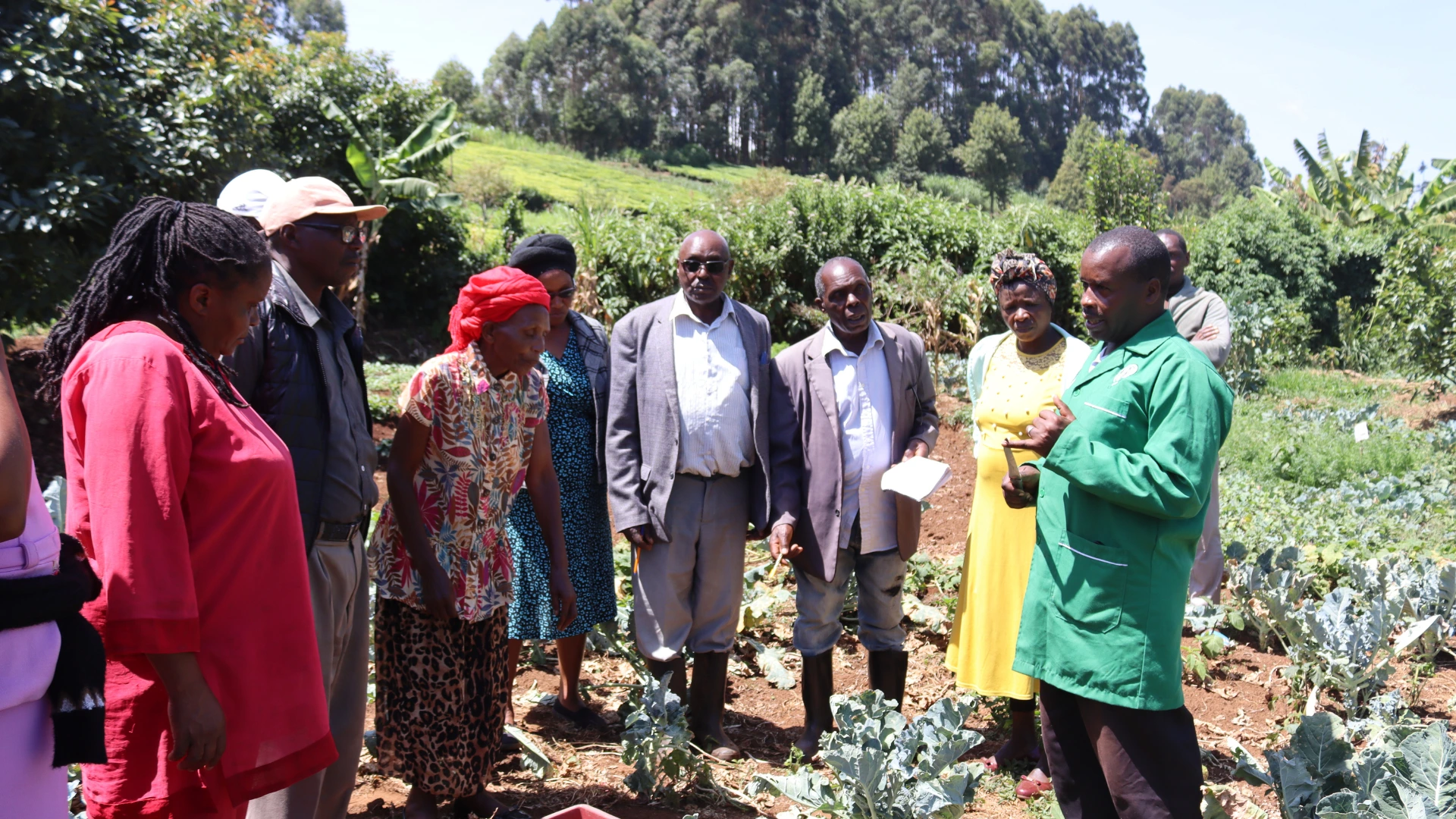
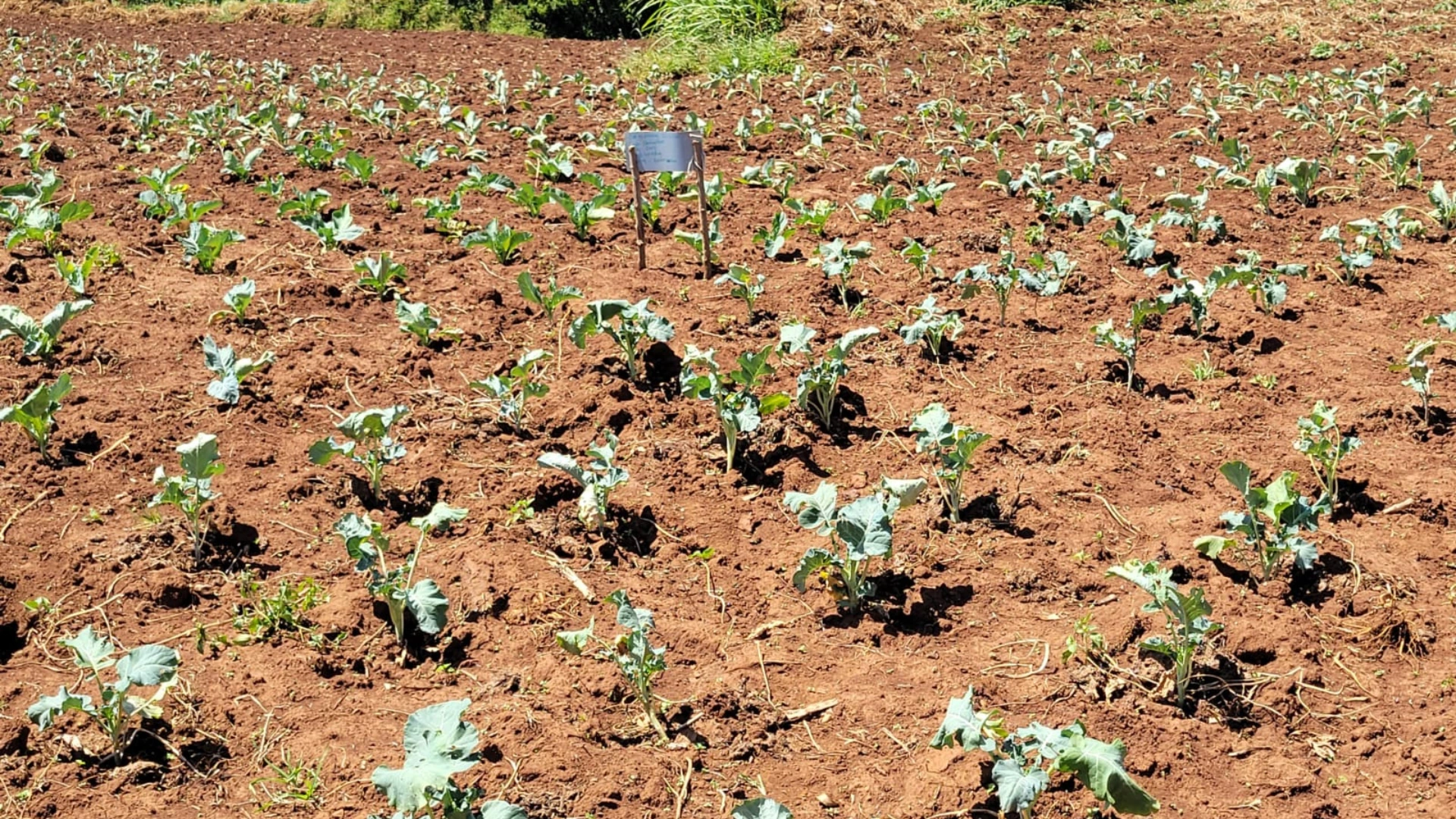
As I stand at the edge of our demonstration plots in Lari, Kinale, watching farmers huddle around freshly transplanted farms of crop varieties, I’m reminded why this work matters. After fourteen weeks of intensive Farmer Field School sessions, I’ve witnessed something remarkable: farmers who once planted by guesswork are now leaning toward planning their production cycles with precision, timing harvests to align with peak market demand. Conducting farm demonstrations, working with farmers, and receiving support from extension officers have been among the most rewarding experiences. It taught us that extension work isn’t just about transferring knowledge; it’s about creating an environment where farmers become their own experts through hands-on learning and systematic observation.
The Power of Seeing is Believing
When we started this demonstration farm initiative, many farmers were sceptical. Why dedicate a portion of their land to learning experiences when they could be growing what they already knew? The turning point came during Week 2, when they established their first nursery beds with the help of the agriculture extension officer.
The process started with soil tests and Maximum Residue Levels (MRLs) for fresh vegetable produce from the ten farms we were to work with. The results formed a good basis for educating farmers on why soil health and proper pest and disease control were of paramount importance. I remember one farmer commenting about his soil test results.“I’ve been farming for more than 20 years, but I have never been keen to do a soil test. It shows that my soil had low phosphorus, and this explains why my crops experienced stunted growth, leading to low yield.”
This was the beauty of the Farmer Field School methodology. It wasn’t lecturing, it was more of demonstrating, observing, and analysing together. The training session was grounded in the reality of what happened in the plots in real time.
Building Capacity Through Structured Learning
The fourteen-week program followed a carefully designed manual guide, and each phase taught me something about effective supervision. With the help of agricultural extension officers, the first week laid the foundation: training on planned market production, staggered harvests, record-keeping, crop selection, and seed sourcing. The extension officers used real examples, showing farmers’ actual price boards from local markets and emphasising the importance and impact of record-keeping and good seed sourcing. Theory means little until farmers understand how planting in March versus May can double their profits by catching the dry-season shortage.
Record keeping, introduced early, seemed tedious to many at first. Some complained that the record book provided by the co-operative was too complicated. Still, from the training, the farmers understood the importance of record-keeping and developed their own ways of recording their activities. By the time we were reviewing nutrition and irrigation management data, farmers were pulling out their notebooks unprompted, comparing their production, input, irrigation, and pest & diseases management records. Simple exercise books divided into columns for seeds, fertilisers, chemicals, labour, and costs have become their most valued farming tool.
“With the record-keeping, it has been easier to track my finances and all the farm records. I don’t need to try and remember as I used to.”– a lead demo farmer
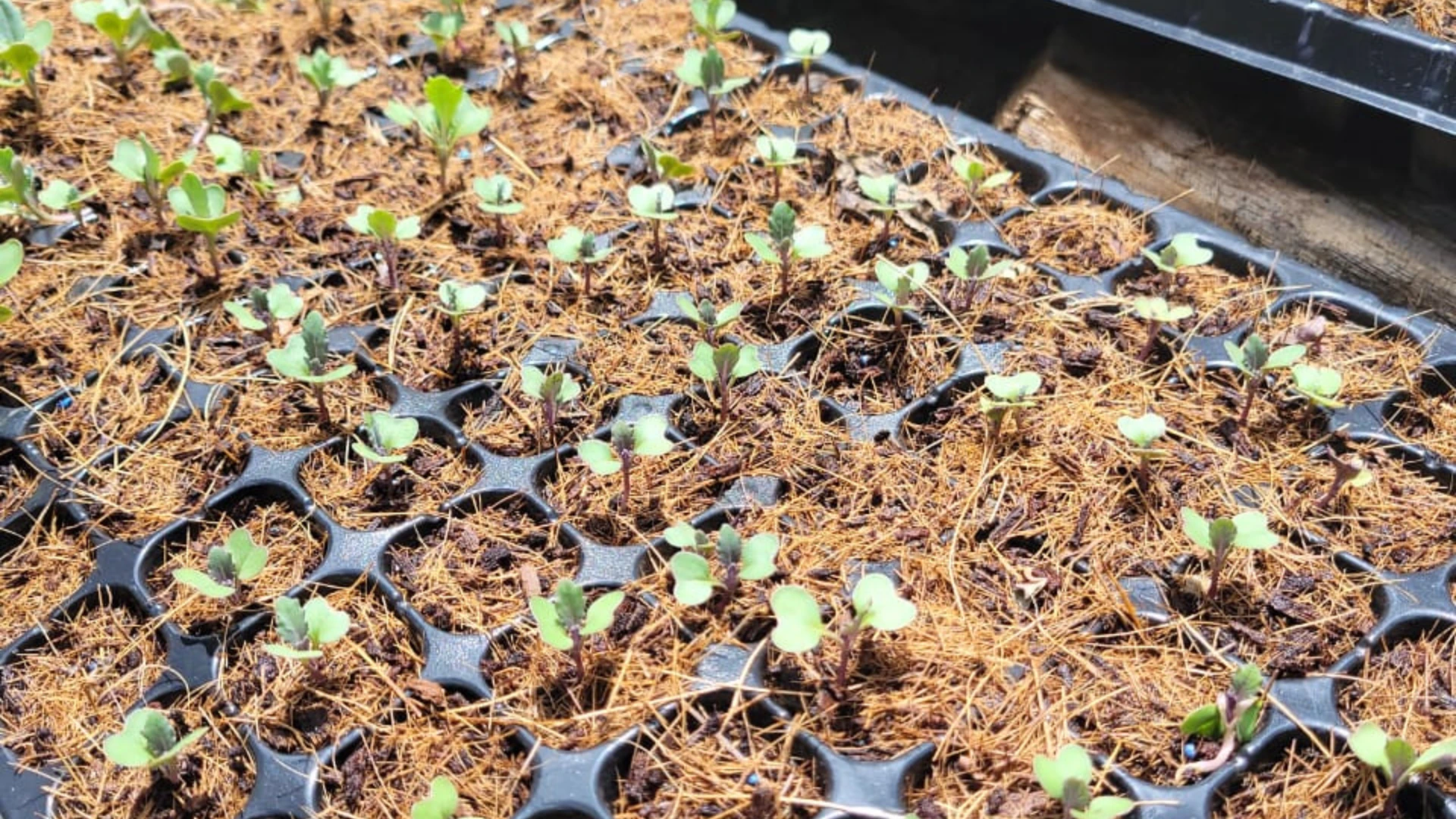
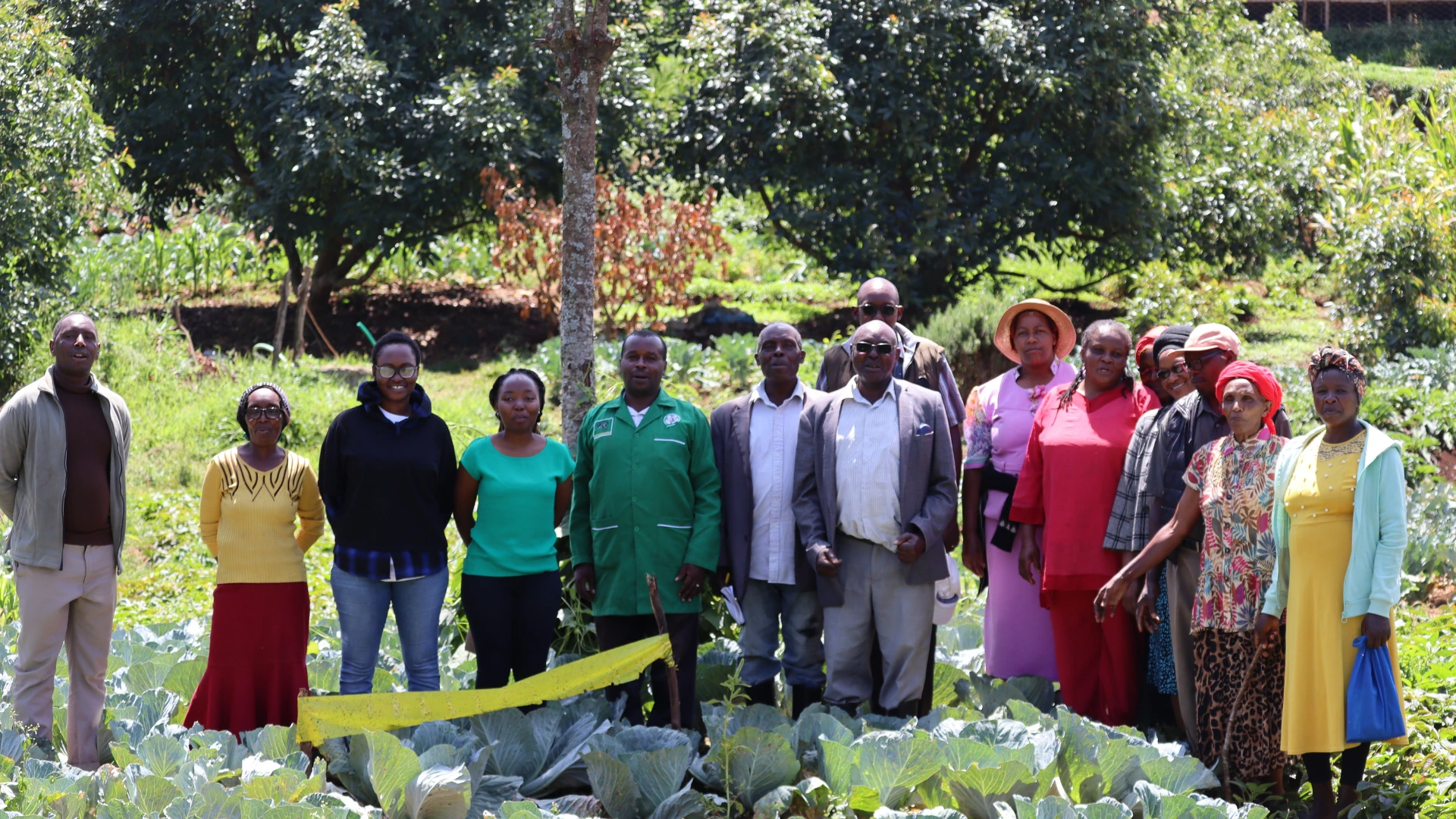
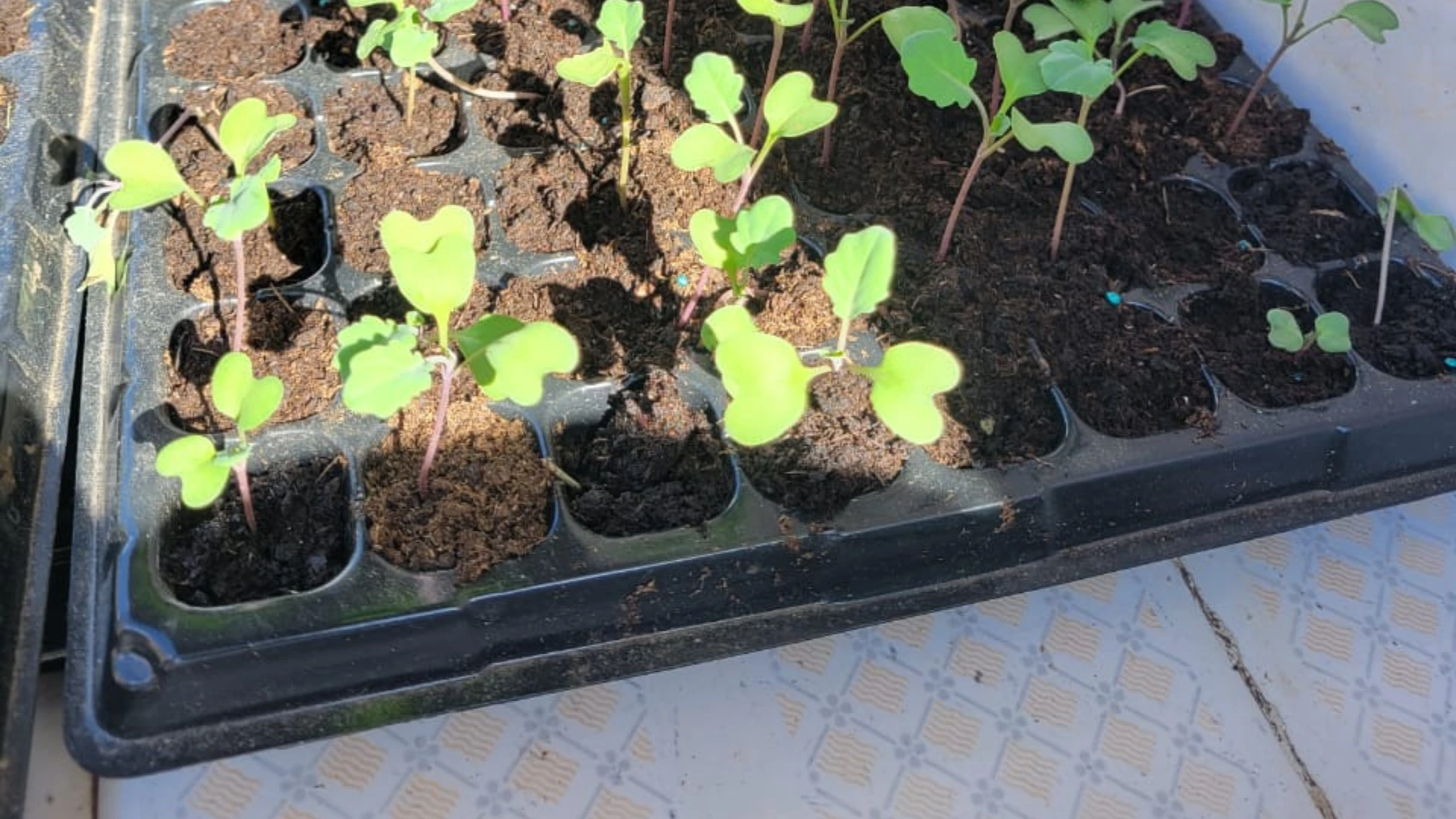
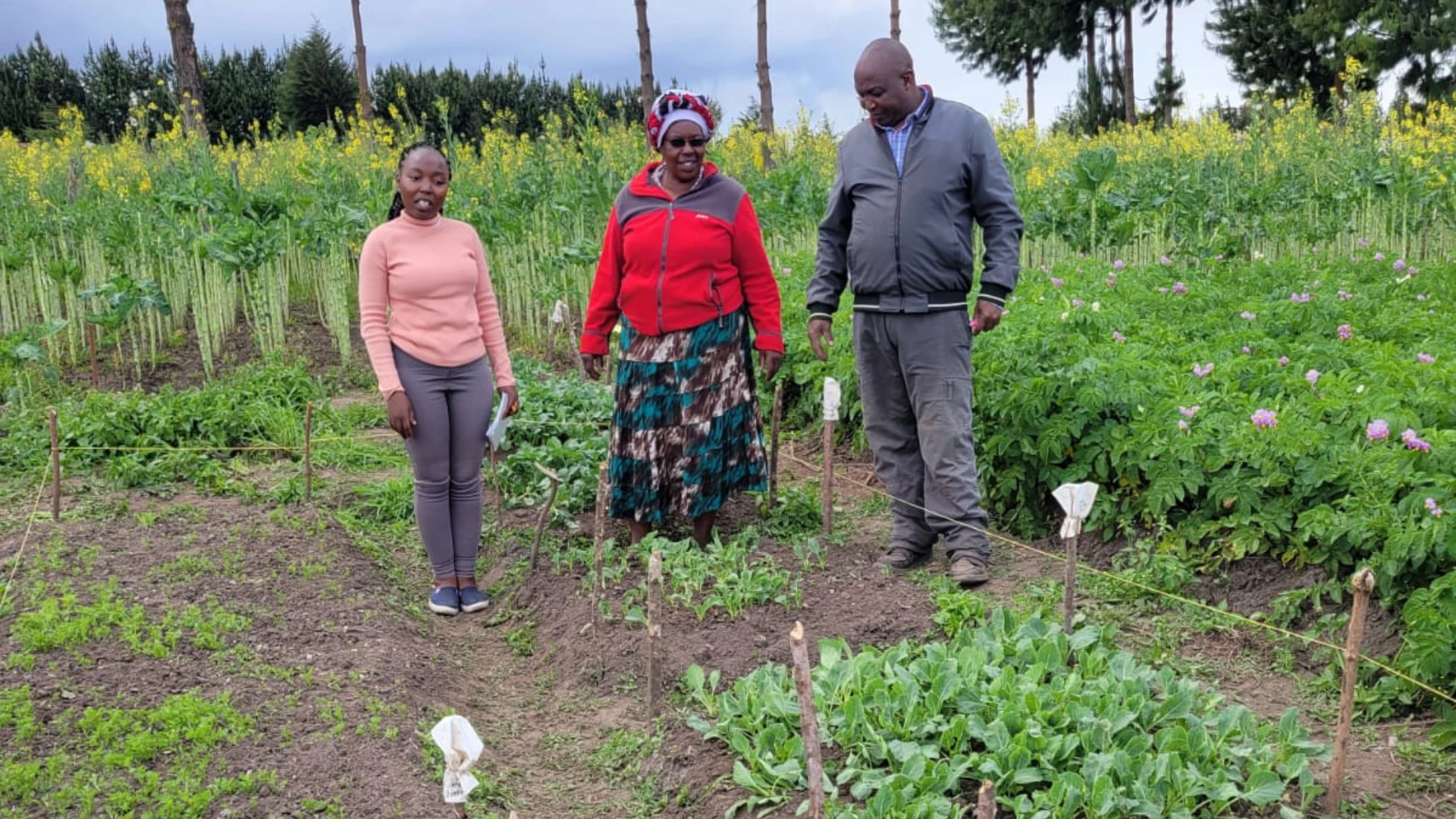
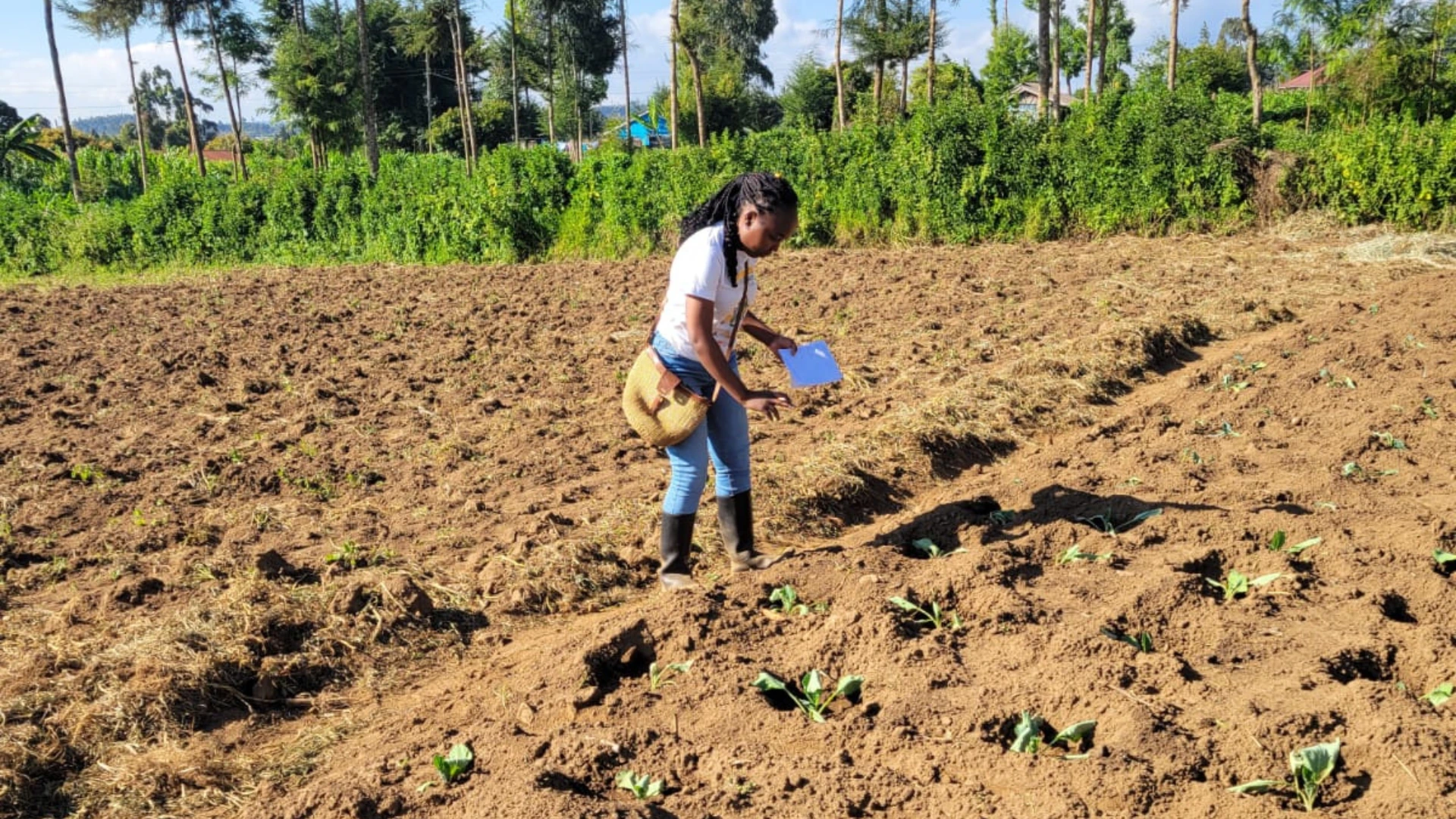
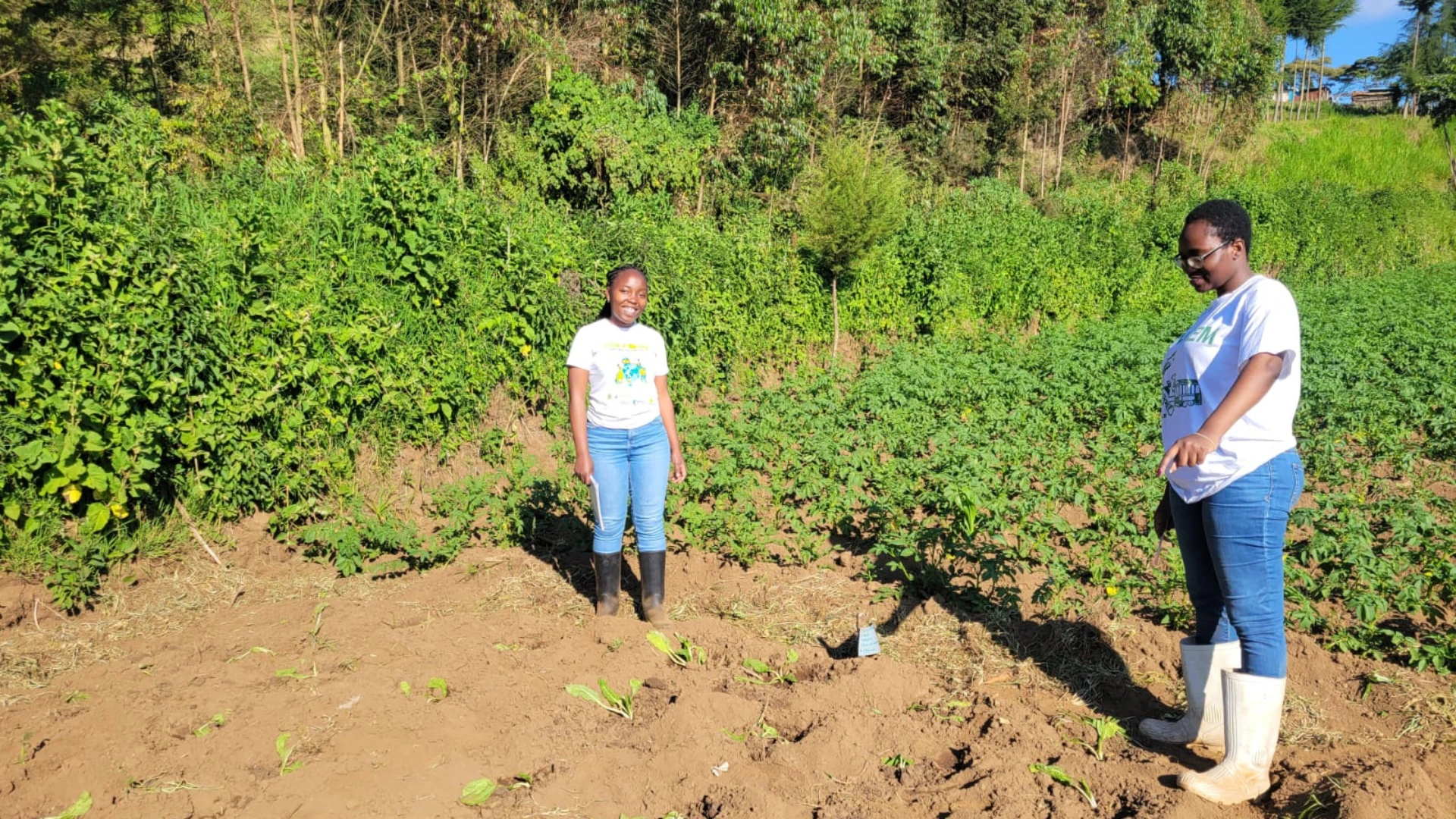
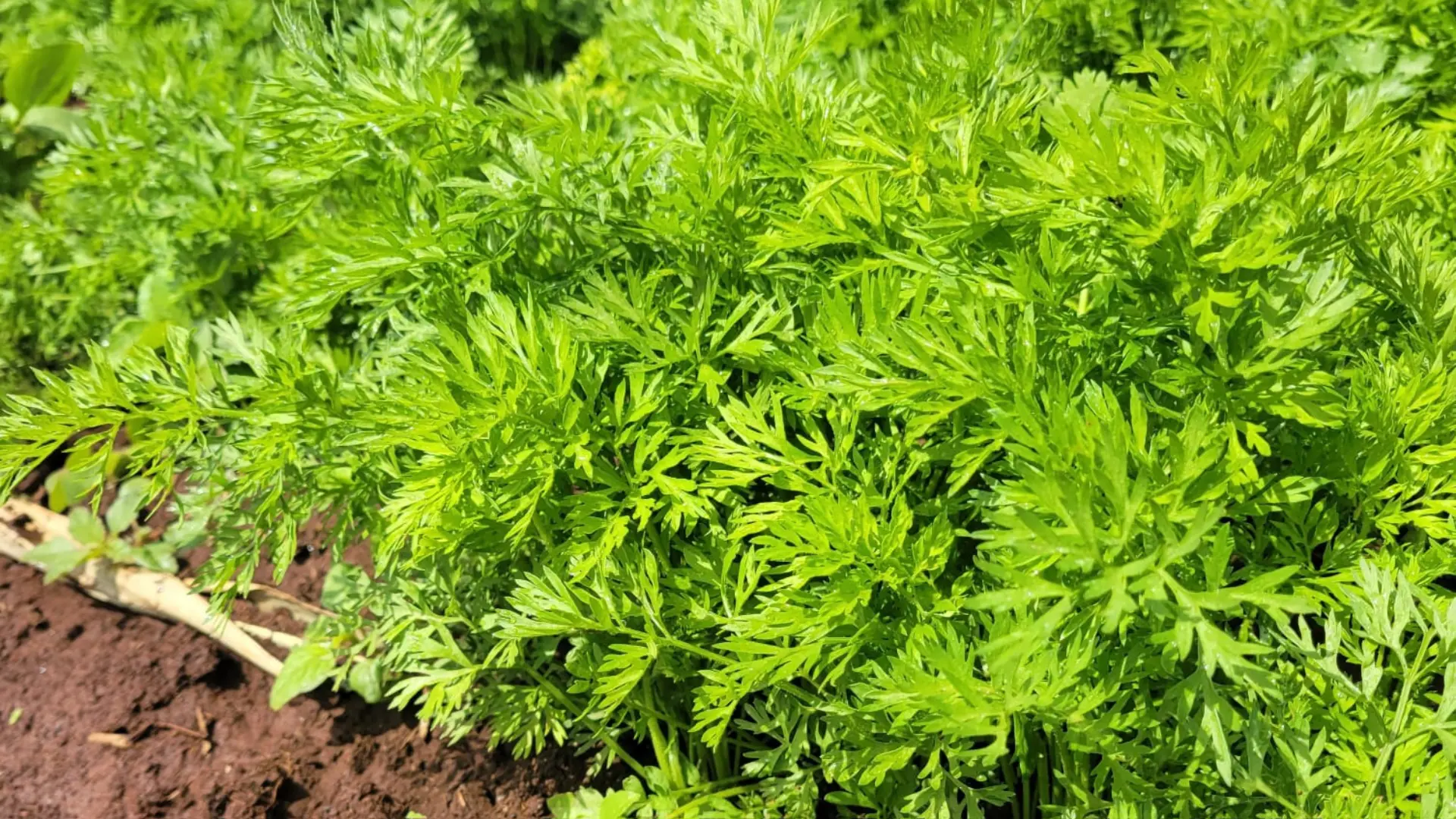
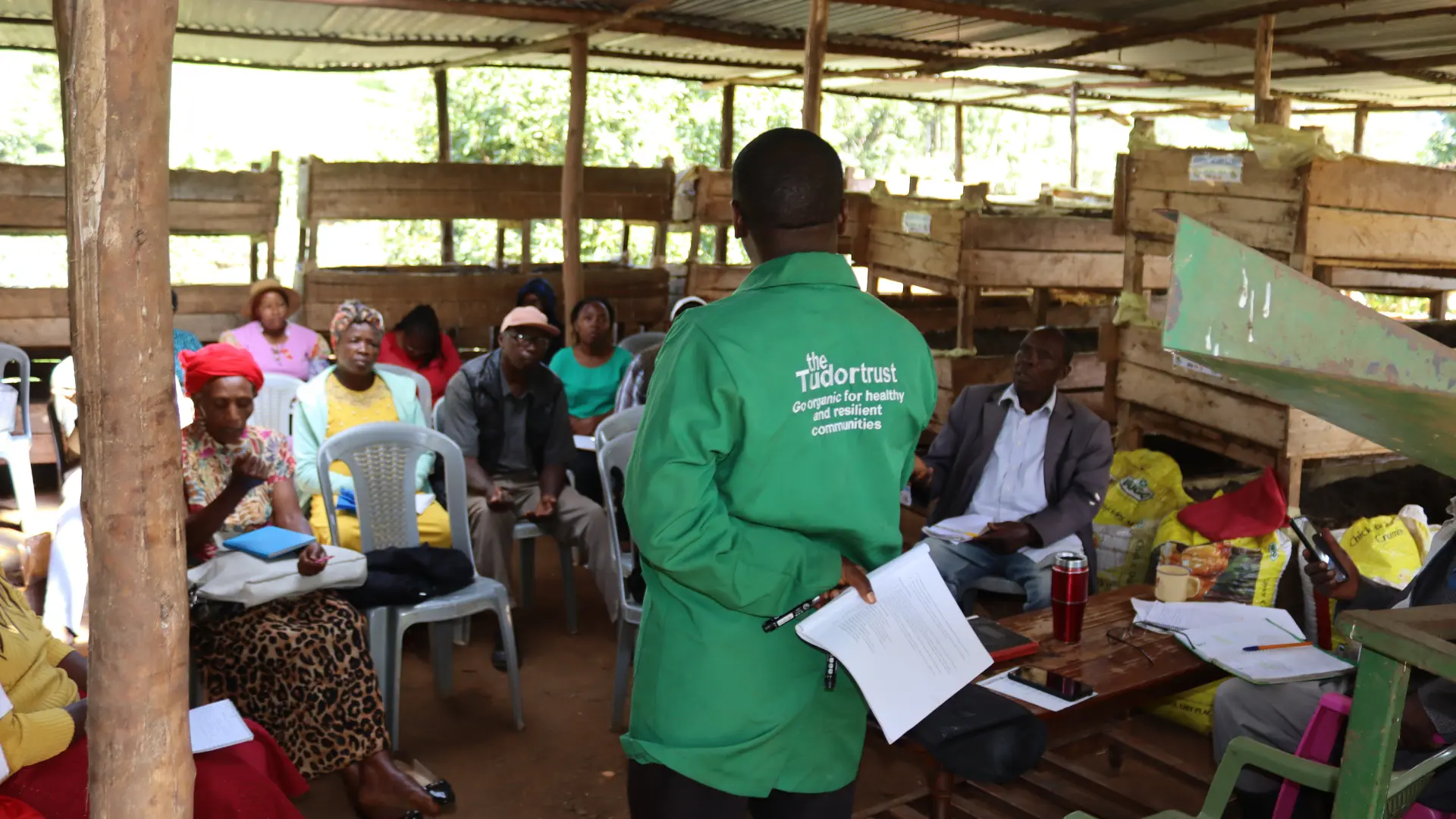
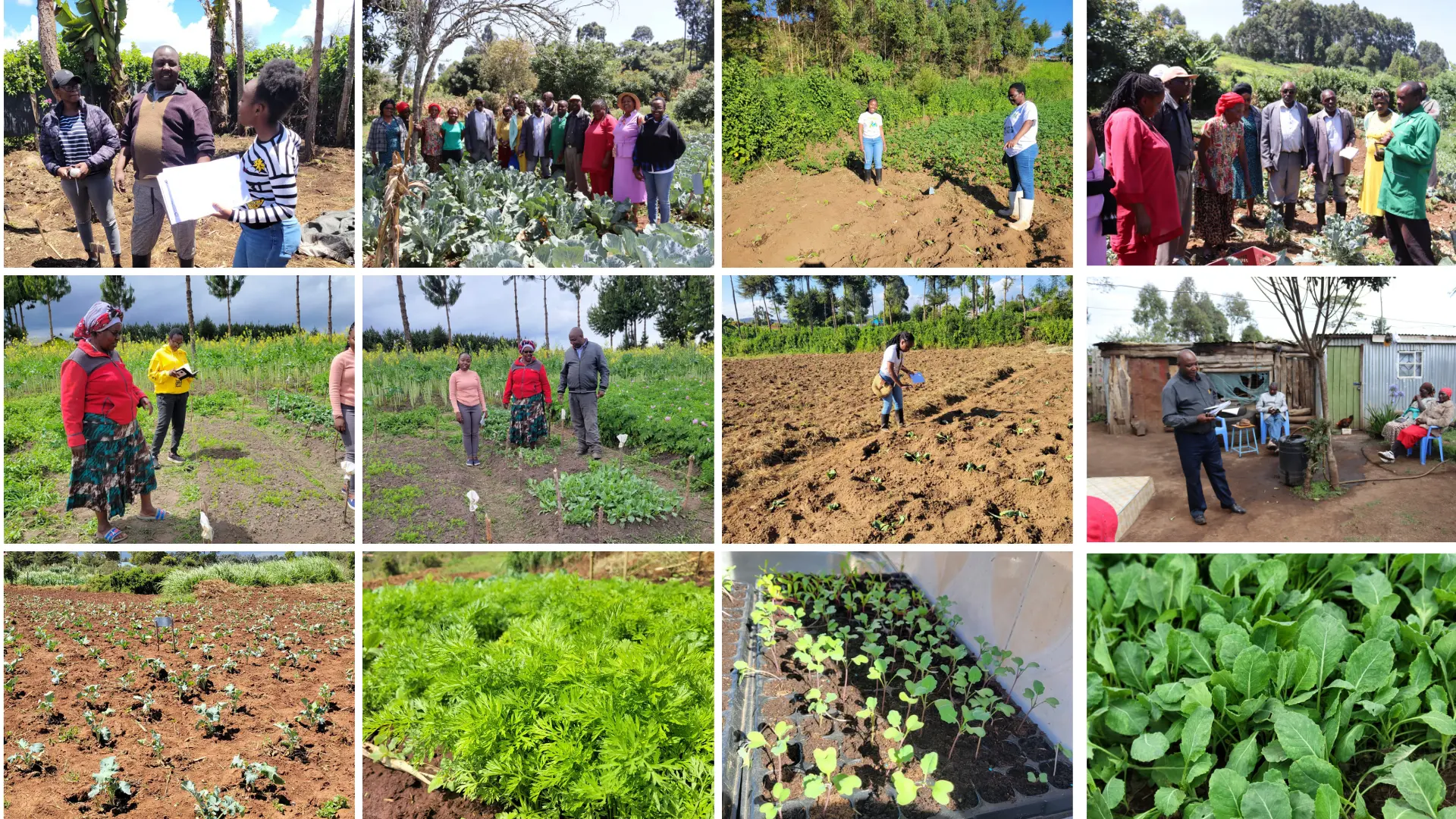
Highlights from our demo farm activities.
The Technical Heart of the Work
The middle weeks, focusing on nursery management, transplanting, and crop nutrition, are where the real transformation happened. Supervising the demonstration plots made me realise that success lies in the details.
In establishing the nursery, farmers learned that it requires patience and precision. The tilling to the time the seedlings are ready for transplanting. The seedling tray introduced was a new concept and way of producing seedlings, exciting at first, yes, and the farmers had a lot of learning on how to better manage and add nutrients to seeds planted in seedling trays. Peer-to-peer learning enabled them to grasp the concept, and some even went ahead to try after failing the first time. Teaching farmers to prepare cocopeat and peat moss properly, to recognise when seedlings need hardening off and to identify the optimal transplanting window.
Transplanting training sessions were also intensive. The practicals were the main part of the training, covering selecting the right time for transplanting, demonstrating proper handling techniques to minimise shock, spacing the seedlings, and irrigation. Farmers were honest enough to admit they didn’t consider spacing when transplanting; instead, their goal back then was to cram the seedlings onto the farm. They noted that the outcome was poor quality, low yield and low income.
Nutrition management training brought soil science to life. Using actual soil tests to identify the problem and working together with the extension officers to solve it. If the phosphorus is deficient, we demonstrate correct fertiliser placement. Farmers started recognising yellowing leaves as nitrogen deficiency rather than just “bad luck” or “bad seeds”.
Integrated Pest Management in Action
The training on pest and disease management is where the integrated approach was seen. Rather than defaulting to chemical sprays, farmers were trained in systematic scouting. The farmers were given flyers that explained in detail which common pests and diseases attack the crops they planted. The farmers were shown in practice how to spray their crops and educated on other pesticide-use concerns, such as reading labels beforehand and applying the correct quantities. One of the most frequent challenges encountered was farmers’ tendency to spray their crops repeatedly in quick succession, sometimes within just two days, leading to chemical toxicity that manifested as leaf burn, with leafy vegetables most severely affected.
“I had to spray again after yesterday because the pests were still rampant”– A lead demo farmer.
The Market Connection
The staggered production approach, that is, planting cabbage weekly or simultaneously planting cauliflower and broccoli varieties with different maturity periods, ensures a continuous supply.
During harvest training in Week 12, farmers finally understood why timing matters. A cabbage harvested too early lacks firmness and weight. Too late, and it splits or bolts. Learning to read maturity indicators, such as firm compact heads, slight cracking at the base, leaves at full size, turns harvesting from guesswork into science. A training session that farmers commented was very helpful.
Post-harvest handling completes the circle. The extension officers demonstrated sorting and grading, showed how plastic crates preserve quality better than sacks for storage and transportation and discussed the impact of using cold storage technology for both storage and transport to the market.
Lessons in Leadership
Follow-up weeks between formal training sessions were crucial. This is when informal farmer-to-farmer learning happens, when the extension officer and lead farmer troubleshoot emerging issues, when theoretical knowledge becomes a practical habit. I’ve learned to resist the urge to over-manage these periods. Farmers need space to experiment and sometimes fail. From the demo work, a lead demo farm failed, which taught the farmers and gave them hands-on experience and lessons.
Measuring Success Beyond Yield
The demo work has shown farmers that, with the good agricultural practices learned during the fourteen-week period, yields will bring them profit and good income.
Farmers now aim to confidently interpret soil test results, adjust their practices accordingly, and maintain detailed production records for decision-making. They are planning backwards from market demand rather than hoping buyers will materialise. They’ve adopted good agricultural practices not because we mandated them, but because they’ve seen the results in their own fields from the demo work. Most importantly, they’ve developed a culture of continuous observation and adaptation.
Looking Forward
As we completed the fourteen-week training period, I’m reflecting on what makes a demonstration farm effective. It’s the combination of structured curriculum and flexible facilitation. It’s honouring traditional farming knowledge while introducing scientific principles. It’s creating space for discovery rather than imposing solutions.
The 10 demo farms became classrooms, laboratories, and training spaces. The cabbage, broccoli, cauliflower, spinach, and carrots growing there represent more than crops; they represent changed mindsets and enhanced capabilities.
Seeing a farmer pull out their notebook unprompted, when they start teaching their neighbours about seedling trays, when they time their planting to catch the December festive season demand—that’s when you know you’ve facilitated something sustainable.
The fields continue teaching us. Our role is simply to create the conditions where farmers can learn from them.