
By Monroe Dikiny Ouma
Background
The African Centre for Technology Studies (ACTS) has long championed the role of science, technology, and innovation (STI) in advancing sustainable development across Africa. In an era defined by climate uncertainty, rapid technological change, and widening development gaps, ACTS has increasingly worked on strengthening the capacities of researchers, practitioners, and policy actors to translate knowledge into action.
Over the past year, this mandate has been brought to life through a portfolio of interconnected initiatives, including the ACTS Pathways Academy, CS-Hub engagements, webinars, policy dialogues, and participation in global convening such as the TC Conference. Collectively, these platforms have created spaces for learning, co-creation, and collaboration across disciplines, regions, and sectors.
The Challenge
Despite growing research output and innovation across the Global South, many early-career researchers and practitioners continue to face persistent barriers. These include limited access to mentorship, weak links between research and policy, insufficient skills in communication and stakeholder engagement, and uneven inclusion across gender and geography. Climate and sustainability challenges further demand systems thinking, cross-sector collaboration, and the ability to navigate complex capacities that are rarely developed through traditional training models. At the same time, emerging opportunities in areas such as Artificial Intelligence, climate entrepreneurship, and digital innovation require new pedagogical approaches that move beyond theory to practice, and from isolated learning to communities of action.
The Intervention
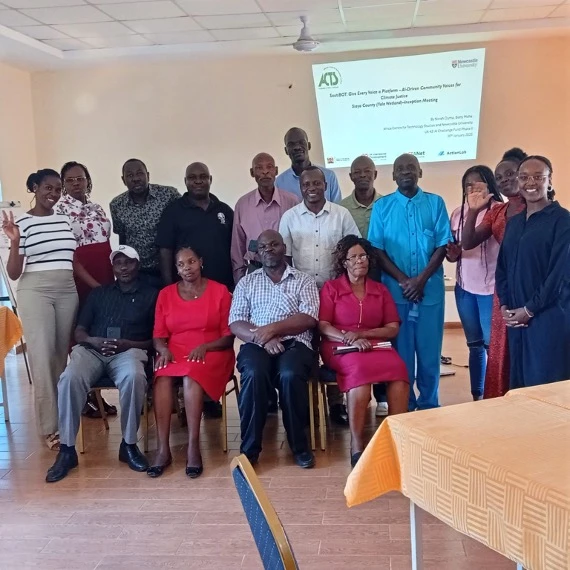
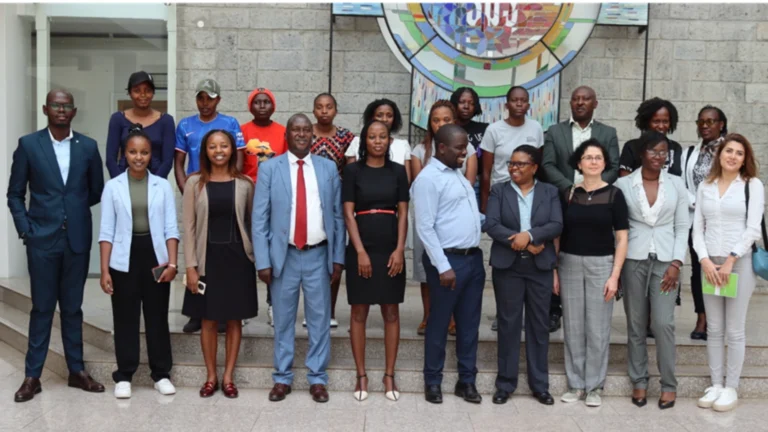
In response, our work at ACTS has focused on designing and delivering integrated, practice-oriented capacity strengthening pathways. Through the ACTS Pathways Academy Fellowship Program, fellows and staff members engaged in mentorship-driven learning covering research communication, proposal development, ESG reporting, stakeholder engagement, and knowledge brokerage. Sessions were deliberately interactive, combining simulations, practical exercises, peer learning, and reflective practice to ensure relevance and inclusion. This initiative involved some program leads facilitating lecture session to early career researchers drawn across Africa and this cemented ACTS’ position as a research think and do tank.
Complementary webinars and learning dialogues explored frontier topics such as AI for climate action, climate entrepreneurship, and digital innovation ecosystems, while platforms like the TC Conference enabled us to engage globally, share insights, and situate African experiences within international debates by championing for decolonization of the mind. Across all interventions, a strong emphasis was placed on GESI-responsive facilitation, multilingual access, and experiential learning ensuring that diverse voices were not only present, but influential.
Impact
Through a continuous engagement, participants have demonstrated measurable growth in confidence, analytical clarity, and applied skills. They moved from viewing capacity strengthening as “training gaps” to embracing more nuanced, systems-oriented approaches. Many produced publishable articles, refined ESG and policy outputs, developed competitive proposals, and initiated podcasts and communication products aimed at broader audiences.
Equally important, the programs have fostered vibrant communities of practice. Participants have consistently built lasting professional relationships, exchanged contacts, and collaborated beyond formal sessions, maintaining engagement through publications, conferences, and joint initiatives. Over time, gender dynamics have also evolved, with facilitation strategies successfully promoting broader participation and leadership across sessions. A recent example of this impact was evident during a media training for women under the Blue Empowerment project, where two fellows volunteered to facilitate a three-day session aimed at empowering women through media engagement.
At an institutional level, these engagements strengthened our role as ACTS to become a knowledge broker and convener, linking research, policy, innovation, and practice. Lessons from the Fellowship are now directly informing the design of future initiatives, including the APA Seasonal School 2026 on Artificial Intelligence for Climate Action which is a collaboration between programs at ACTS.
Conclusion
The work done this year alone demonstrates that when capacity strengthening is intentional, inclusive, and practice-driven, it becomes a powerful catalyst for change. By creating pathways that connect knowledge to action, people to policy, and innovation to impact, ACTS continues to empower a new generation of African leaders to respond to climate and development challenges with confidence, creativity, and collaboration. As these pathways expand from fellowships to seasonal schools, and global dialogues, the ripple effects will continue to shape more resilient, inclusive, and sustainable futures across the continent and beyond.