
By Dr. Nicholas Odongo
Background
There is an old African proverb, “The eye crosses the river before the body” – which speaks to the twin virtues of ambition (the vision to go far) and diligence (the work required to get there). The proverb communicates that ambition precedes the intervention to address a challenge – overcoming challenges require foresight.
This proverb resonates well within the context of the dangerous, unpredictable journey of pregnancy—a journey where hidden currents can suddenly turn fatal.
For decades, doctors and midwives in Zambia, Malawi, and Zimbabwe have stood on the banks of this river, dedicated but often blind to the invisible risks threatening the mothers in their care. But today, a new vision has emerged, thanks to the Science Granting Councils Initiative (SGCI).
The Challenge
In many rural communities, pregnancy and childbirth are celebrated, but with increasing health risks & complication, the celebrations are these days masked with a fear of the unknown. A mother may appear healthy while silent threats like pre-eclampsia or sepsis brew internally. Without advanced diagnostics, these risks remain invisible until the storm breaks. Despite the tireless diligence of midwives, their limited tools are often insufficient against these unseen dangers, turning what should be a journey of life into a tragedy of the unknown.
Africa’s healthcare systems face major challenges, from limited human resources, gaps in critical infrastructure and limited funding. One of the most pressing and urgent health concerns in Africa, though, is the burden of high maternal and neonatal mortality rates (see table 1). Globally, every day, there are about 810 preventable deaths related to pregnancy and childbirth. In Sub-Saharan Africa, the problem is much more significant. “A woman dies every two minutes due to pregnancy or childbirth” (UN agencies). In 2020, about 70% of all maternal deaths were in sub-Saharan Africa (WHO, 2023). Many of these fatalities can be averted through timely detection and appropriate management of high-risk pregnancies. For this reason, early detection of high-risk pregnancies is critical to addressing complications and preventing maternal mortality.
“Pregnancy and childbearing have been a risky affair for mothers in Africa…” Dr. Kapina Muzala, Director of Surveillance & Disease Intelligence at the Zambia National Public Health Institute (ZNPHI). Pregnancy remains a sensitive period in a woman’s life, demanding maternal and neonatal care of the highest quality.
“Pregnancy and childbearing have been a risky affair for mothers in Africa…” Dr. Kapina Muzala, Director of Surveillance & Disease Intelligence at ZNPHI
Table 1: Maternal and Neonatal Mortality in Select Countries
| Malawi | Zambia | Zimbabwe | Africa | World | ||
| Maternal mortality per 100,000 live births | Reality (WHO 2020) | 381 | 135 | 357 | 531.5 | 223.5 |
| Target | Less than 70/ 100,000 live births by 2030 (UN SDGs Target 3.1) | |||||
| Neonatal deaths per 1,000 live births | Reality (WHO, 2022) | 18.7 | 24.1 | 24.3 | 26.3 | 17.3 |
| Target | Less than 12/ 1,000 live births by 2030 (UN SDGs Target 3.2) | |||||
The researchers studied the problem and identified the limitations in precision medicine as one of the critical hinderances to attaining the SDG 3.1 and 3.2 targets. A mother may look healthy on the outside, but silently, her blood pressure may be creeping up towards pre-eclampsia, or an infection may be blooming in her bloodstream. Without advanced diagnostics, these risks are often invisible until the storm breaks. By then, it is often too late. The diligence of the midwives—working tirelessly with limited tools—is sometimes not enough against the unseen. They needed a tool that matched their devotion with precision.
In remote villages in the continent, for instance, health systems are largely fragmented, with vital patient data trapped in paper ledgers that are exposed to damage in clinics. Such data is critical for enhancing timely and precise diagnostics to ensure interventions are effective.
The Intervention
With the challenge well documented, ‘End Preventable Maternal Mortality’ (EPPM) remains a priority global target (WHO, 2015), especially in Africa. SDG 3 has set the target of reducing global maternal mortality rate to less than 70 per 100,000 births by 2030 and reducing neonatal mortality in all countries to at least 12 per 1,000 live births; and there is an urgency to design innovative solutions to hasten the pace at which these targets are being achieved in Africa.
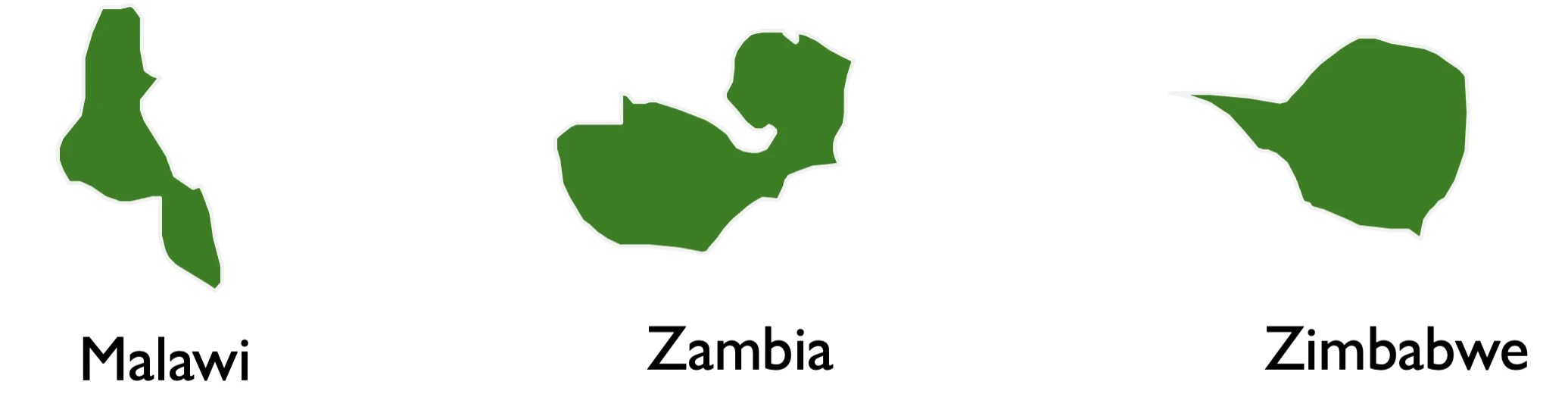
Through the Science Granting Councils Initiative (SGCI), under the Research and Innovation Management Project implemented by a consortium led by the African Centre for Technology Studies (ACTS), three researchers from Malawi, Zambia, and Zimbabwe joined forces to harness the capabilities of artificial intelligence, machine learning and robotics to create a system that can autonomously assess and analyze vital signs, clinical indicators, and early warning signs for pregnancies. They are using the existing data to build integrated digital health platforms.
In a joint effort
- Researchers scrubbed years of handwritten records to digitize the past and more importantly collected new data from hospitals
- Nurses and clinicians tested the algorithms against real-world chaos in busy wards.
- Policy experts worked to ensure this new “digital doctor” fit within national health regulations. This was not a sprint; it was a marathon run in a relay. They stitched together a digital safety net across three borders, proving that science knows no nationality.
An epidemiologist from Zambia, a seasoned mid wife from Malawi and a data scientist from Zimbabwe have effectively built a “third eye” for medical professionals. They used thousands of health records to build Artificial Intelligence and Machine Learning super-assistant for medical professionals. The researchers have designed a two-sided Artificial Intelligence risk predictive model for early identification of high-risk antenatal mothers; an AI Machine Learning (ML) model for predicting high risk pregnancies and a robotic system for predicting high risk unborn children and infants.
Moreover, the model is dualistic – facilitating collaboration between midwives and pregnant women in risk assessments. The researchers have invested in extensive collaboration with maternal healthcare practitioners (midwives and nurses), which will allow for customized treatment plans and empower timely and informed decision making. AI-driven insights synergizing with the expertise of experienced midwives is set to revolutionize maternal and neonatal healthcare in southern Africa.
The Impact
The impact of this intervention is measured in safe passages, from pregnancy to successful delivery of health babies.
In rural clinics, a midwife’s tablet now flashes specific warnings—such as “High Risk for Sepsis”—long before symptoms related with high-risk pregnancies escalate. This early vision allows for immediate clinical intervention, shifting the narrative of maternal health from “fate” to “active management.” By ensuring safe passage, the project proves that African-led innovation is not just theoretical ambition, but a life-saving reality.
The result is a rigorous risk predictive model—a digital sentinel that analyzes subtle patterns in vitals and history. The application of AI algorithms will enhance the diagnostic capacity of health systems to accurately recognize patterns associated with high-risk conditions, enabling timely interventions and improved maternal and neonatal outcomes. Like a seasoned sailor smelling rain before clouds gather, this tool detects complications weeks before they manifest.
The model holds a profound potential to shape maternal and neonatal care in Africa and will give more confidence and hope to pregnant mothers. With this model, healthcare professionals are able to achieve precise risk evaluations for pregnancies and classify them correctly as high-risk or otherwise, allowing for accurate prognosis and timely/ effective management. A midwife/ nurse enters a mother’s data into a tablet. The screen doesn’t just show her name; it flashes an amber warning: High Risk for Sepsis. The nurse/ midwife administers antibiotics before the fever even starts. The mother doesn’t just survive; she thrives. The narrative of maternal/ neonatal health is now no longer fate, but good management.
Without this intervention, the status quo is that the high-risk pregnancies may be identified at the time of delivery or even after – which is often too little, too late. But with this intervention, when a case is logged on a tablet, diagnosis (with high confidence levels) appears on a dashboard instantly. Data is no longer static ink on paper; it is a pulse.
The impact of this project is best understood not in code, but in the quiet breathing of a sleeping newborn, right next to their mother. For the mother, it removes the terror of the unknown; for the community, it keeps and sustains the family unit.
Conclusion
Through this project, science has become the bridge over the river. By marrying ambition with diligence, this AI guardian ensures that both mother and child(ren) reach the other side dry, safe, and alive, finally illuminating the once-dark waters of maternal care. The diligence of midwives—working tirelessly with limited tools—is sometimes not enough against the unseen. They needed a tool that match their devotion with precision.
The intervention is local (designed, led, and executed by local researchers); Africa is no longer an observer but has become an architect of their own solutions and science is taking weaving traditional knowledge with the strong fibers of modern innovation to create lasting impact – the difference between life and death.