
By Fiona Makayoto, Christine Ndiritu, Patience Ochieng, Zipporah Maina, Catherine Kilelu.
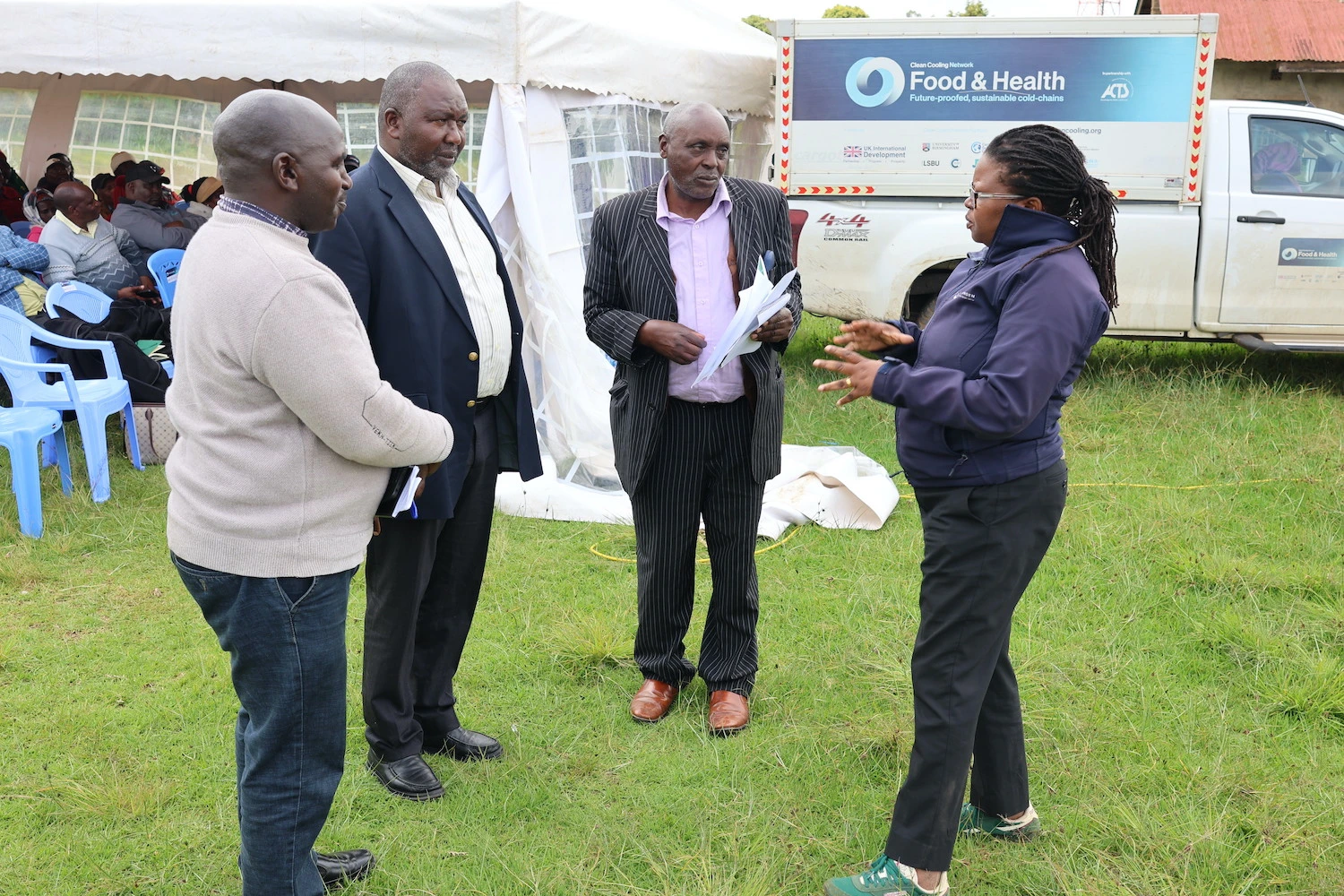
Farmers in Lari gathered on Tuesday, 14 April 2026 for a Farmers Day that brought together the Lari Horticultural Farmers’ Cooperative Society (LHFCS), county leadership and a range of stakeholders supporting agriculture. Among those present was Chief Officer for Agriculture in Kiambu County Benson Ndung’u, alongside partners including Stella from Farmrise, Joyce Gema from Tradecare, one of the off takers Caroline and Linet, Safi Organics who engaged farmers on soil health and input use.
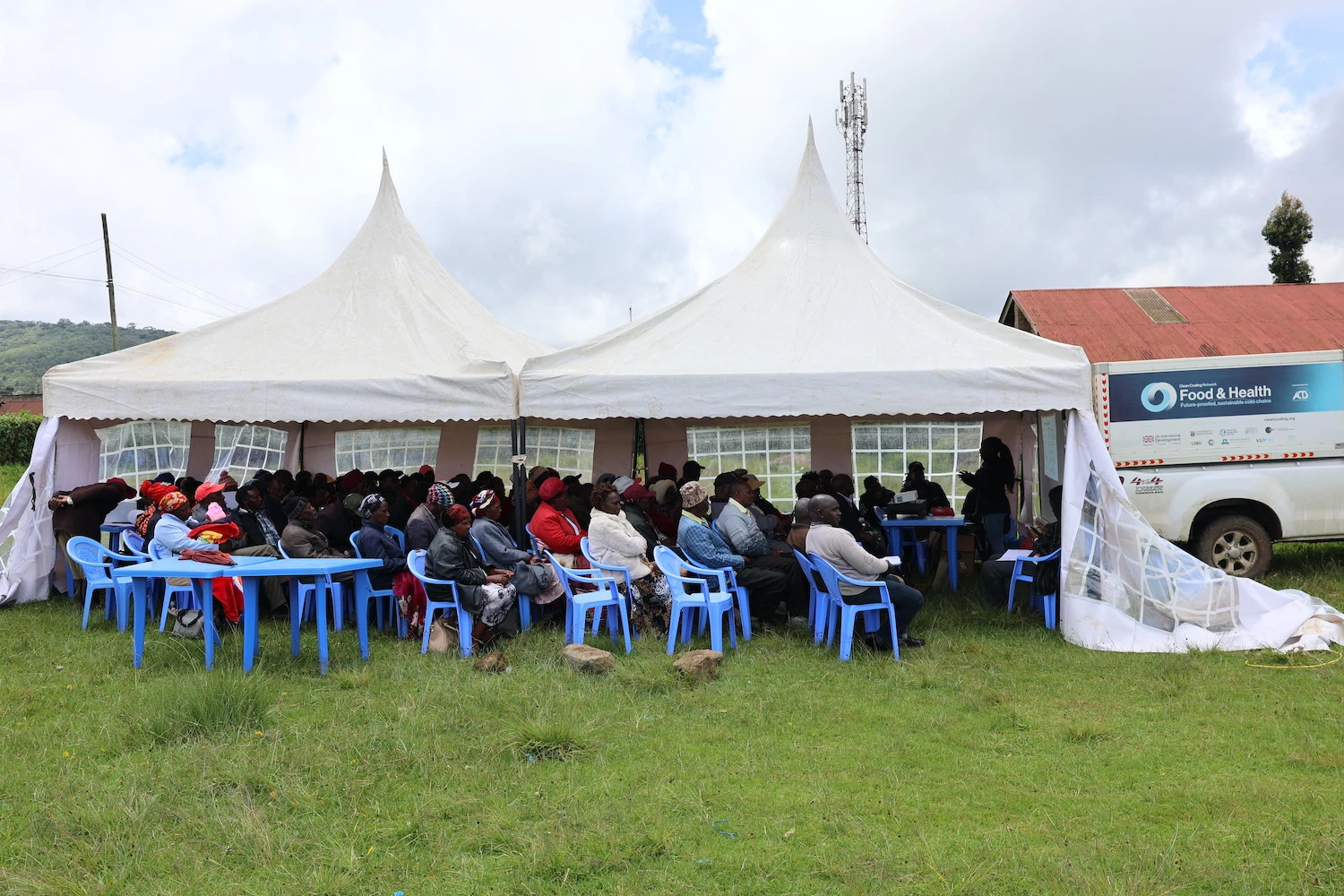
The agenda for the day centered on yield, improving productivity, good farming practices and a future education plan by the cooperative targeting farmers. Farmers also discussed the idea of working in clusters to strengthen coordination and shared learning.
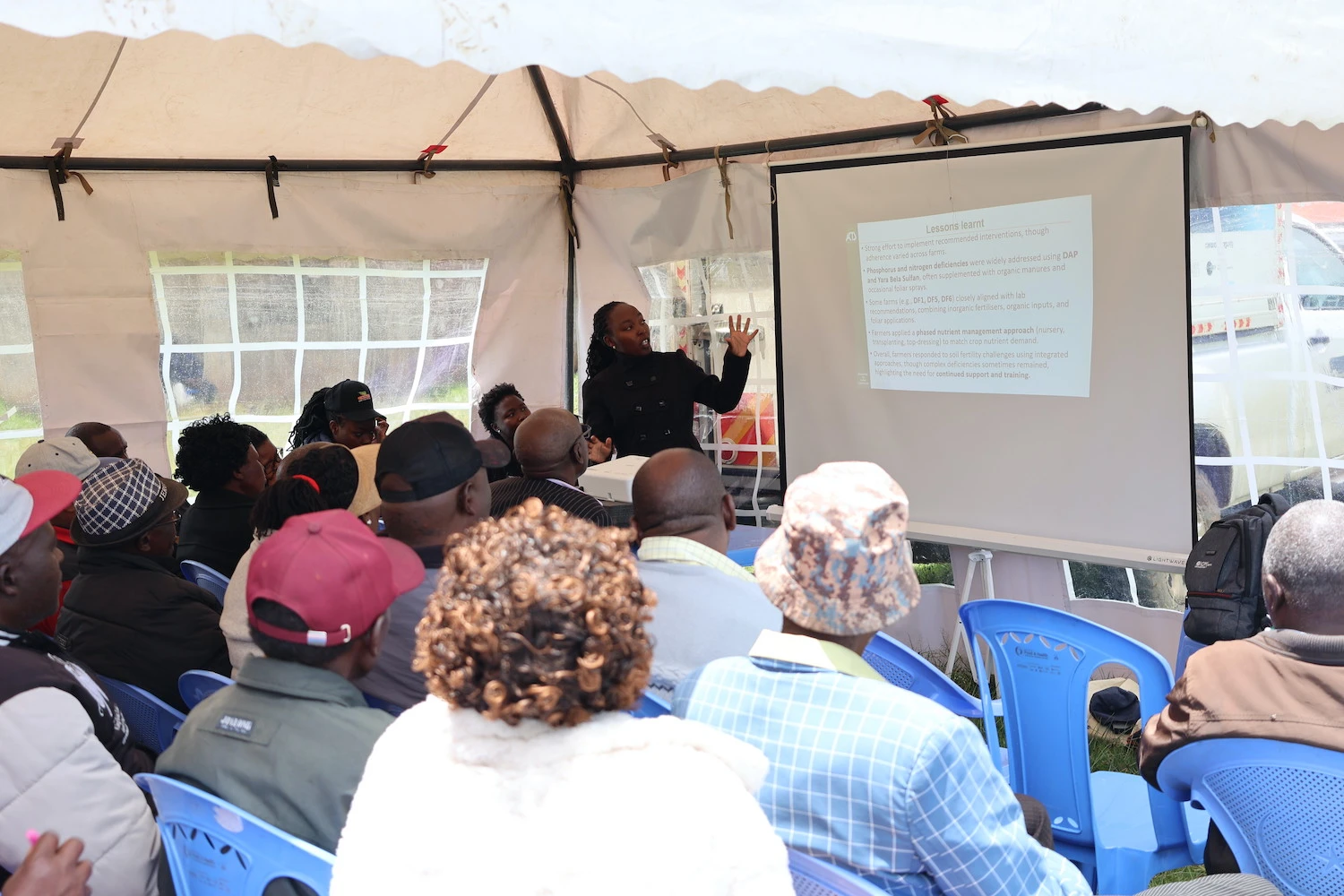
The session, led by the ACES project team members together with LHFCS, kicked off with area Extension Officers sharing key learnings and feedback from earlier demo farm activities carried out from October 2025 to February 2026. During these sessions, discussions focused on key results such as estimated yield per acre and the cost of production. Farmers were encouraged to pay close attention to these aspects, as they provide a practical way to assess overall farm performance. The conversation also highlighted how understanding both yields and costs can support better decision-making, helping farmers not only improve productivity but also ensure that their efforts translate into meaningful profits. In reflecting the completed farm demonstration activity, it was evident that soil testing was a critical first step in understanding the condition of the soil. It provides the foundation for determining the appropriate inputs to use and informs the strategies needed to ensure crops receive optimal nutrition. Farmers engaged in a review of the Good Agricultural Practice (GAP) such as use of raised nurseries, spacing, record keeping, and proper site selection among other, noting that each crop has its own requirements. For instance, carrots, previously given little attention in terms of soil preparation by many farmers, were noted to require carefully prepared soil and appropriate fertilizer application to support proper root development, just like other crops. Agriculture Extension Officer Gitau explained that this approach is the most important, as it entails understanding the condition of each farm before any activity takes place and ensures that the correct and needed inputs are accurately identified.
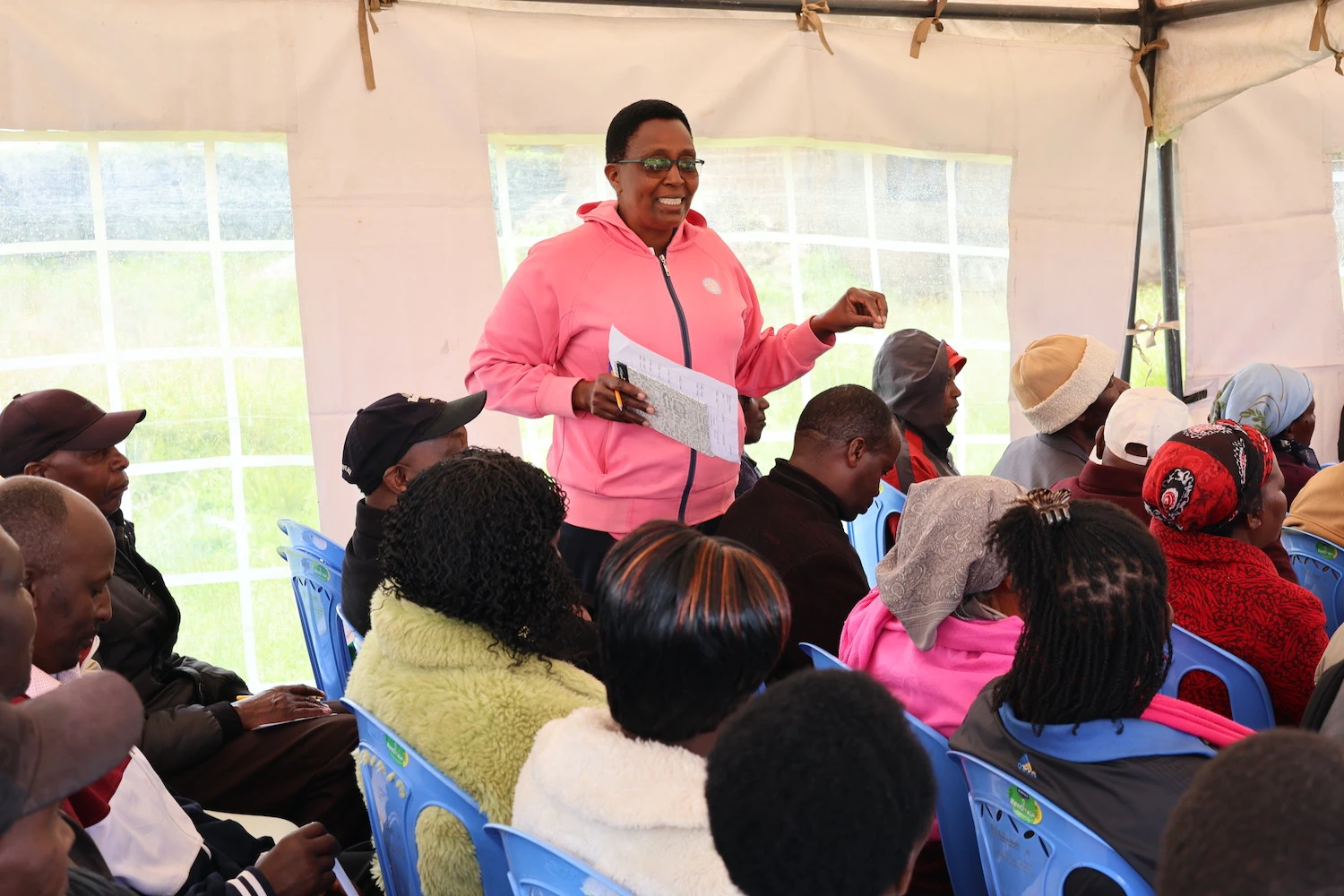
Pests and crop diseases remain among the top challenges farmers face. As Agriculture Extension Officer Kimani noted, “Pests and crop diseases vary, and this variation means they require different responses.” Farmers were introduced to integrated pest management approaches that combine different techniques to manage pests more effectively.
Farmers also explored natural pest control methods as part of a broader integrated pest management approach. Some are now planting marigold flowers around their crops and using onions in and around their farms. These practices work in different ways. Onions produce a strong scent that can interfere with how some pests locate crops, while marigold helps in managing soil pests such as worms that damage roots, especially those of vegetables. A highlight of the session was a summary of integrated pest management presented through a song in the local language, making the information easier to understand, remember and share across the farming community. From the farmers’ perspective, this training helped them better understand and reflect on each stage of production, from soil preparation to crop management.
There were, however, challenges. Extension officers noted the need for more time with farmers, as most groups received only two training sessions per month. Nurseries were also established during the hot season, which affected outcomes.
From the demo plots to individual farms, farmers reported progress in adopting better practices and selecting suitable seed varieties. The focus now is on sustaining these gains through improved market access, use of certified seeds and organizing farmers into clusters for collective soil testing. There was also emphasis on record keeping and planned production.
In light of this shift, LHFCS marketing board member, Benson shared that the cooperative currently brings together 238 members, with carrot and cabbage farming forming the highest bulk in terms of production at 79 percent. Potatoes also remain important crops, providing diversity in both production and income streams for farmers. He explained that the cooperative is working to move beyond individual, uncoordinated farming towards a more structured approach. One of the key priorities is the use of planting calendars, which will help farmers align their production cycles. This is expected to reduce market gluts and shortages by ensuring that crops are grown and supplied in a more predictable and organized way.
Traceability is another area of focus. By being able to track produce from the farm to the market, the cooperative aims to build trust with buyers and open up opportunities in markets that require clear sourcing and accountability. This also supports better quality control across the value chain.
Benson also emphasized the role of collective action in reducing costs. Through bulk purchasing of inputs such as seeds and fertilizers, farmers are able to access the right quality at lower prices. This not only cuts down individual expenses but also helps standardize production across the cooperative.
LHFCS is also keen to bring in various expertise to support the farmers. Marketing specialist, Joyce Gema from Tradecare guided farmers through a marketing session, focusing on identifying market segments and building structured approaches to selling produce. She emphasized that food safety plays a major role in consumer trust and market access.
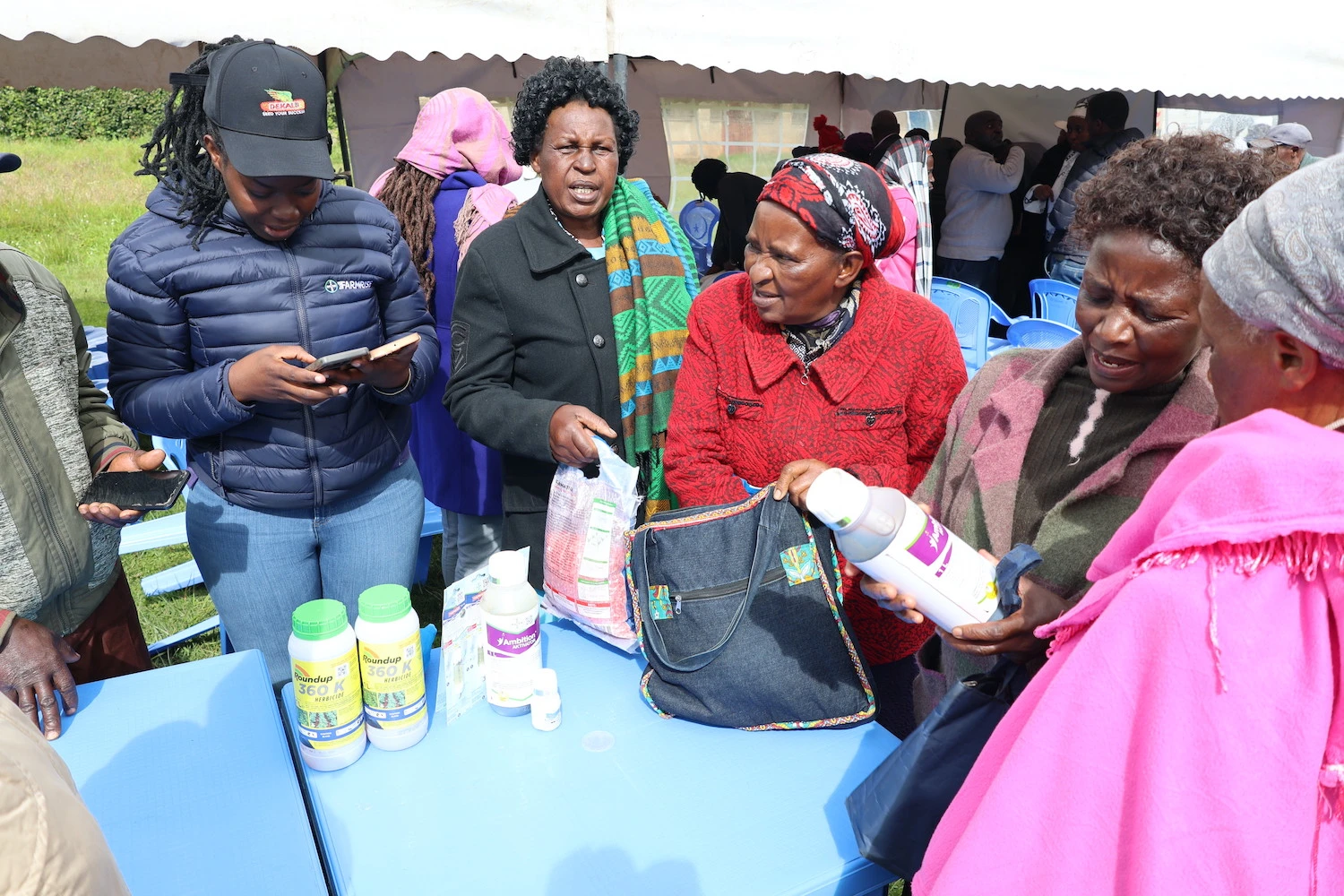
Stella from Farmrise and Linet, a fertilizer provider from Safi Organics also highlighted the importance of using inputs appropriately, noting that soil health directly affects food quality. As she put it, “Feed the soil what you would be comfortable feeding yourself, because what goes into the soil eventually comes back to you.”
The Farmers Day also created space for direct interaction between farmers and buyers. Caroline, a key off taker attended to better understand production practices and connect with the farmers behind the produce. Reflecting on the experience, she shared, “This gave me a chance to see where my produce comes from and understand the work behind it.”
The day closed with recommendations to strengthen extension engagement, improve record keeping and support more structured production planning.