
By Yvonne Gitu
From 3rd to 5th December 2025, Flone Initiative hosted the Women & Transport Africa (WTA) Conference, a three-day event that brought together transport professionals, policymakers, researchers, urban planners, private sector leaders, and advocates for gender equity in transport across Africa. The event centred on gender inclusivity, accessibility, and sustainable transport solutions, and provided a platform for dynamic discussions, knowledge exchange, and strategic collaboration.
Background
A key highlight of the conference was the spotlight on e-mobility, particularly how the emerging electric mobility sector can drive both sustainability and gender inclusion.
The African Centre for Technology Studies (ACTS) is currently implementing a project titled The Transformative Power of Electric Mobility Technology in Kenya: Understanding and Empowering Women Entrepreneurs. Part of its broader mission to advance gender-responsive innovation and sustainable e-mobility transport solutions.
Launched in December 2024 and running through 2026, this project in partnership with Coventry University and the Kenya Climate Innovation Centre (KCIC) seeks to:
- Understand barriers that prevent women from fully participating in the e-mobility value chain.
- Identify opportunities for women entrepreneurs in emerging sub-sectors like electric two- and three-wheelers, charging infrastructure, and green logistics.
- Inform inclusive policy and practice that support women’s economic empowerment within Kenya’s transition to electric mobility.
Through research, stakeholder engagement, skills building, and policy recommendations, the project aims to strengthen women’s participation not only as consumers but as entrepreneurs, innovators, and leaders in the electric transport ecosystem.
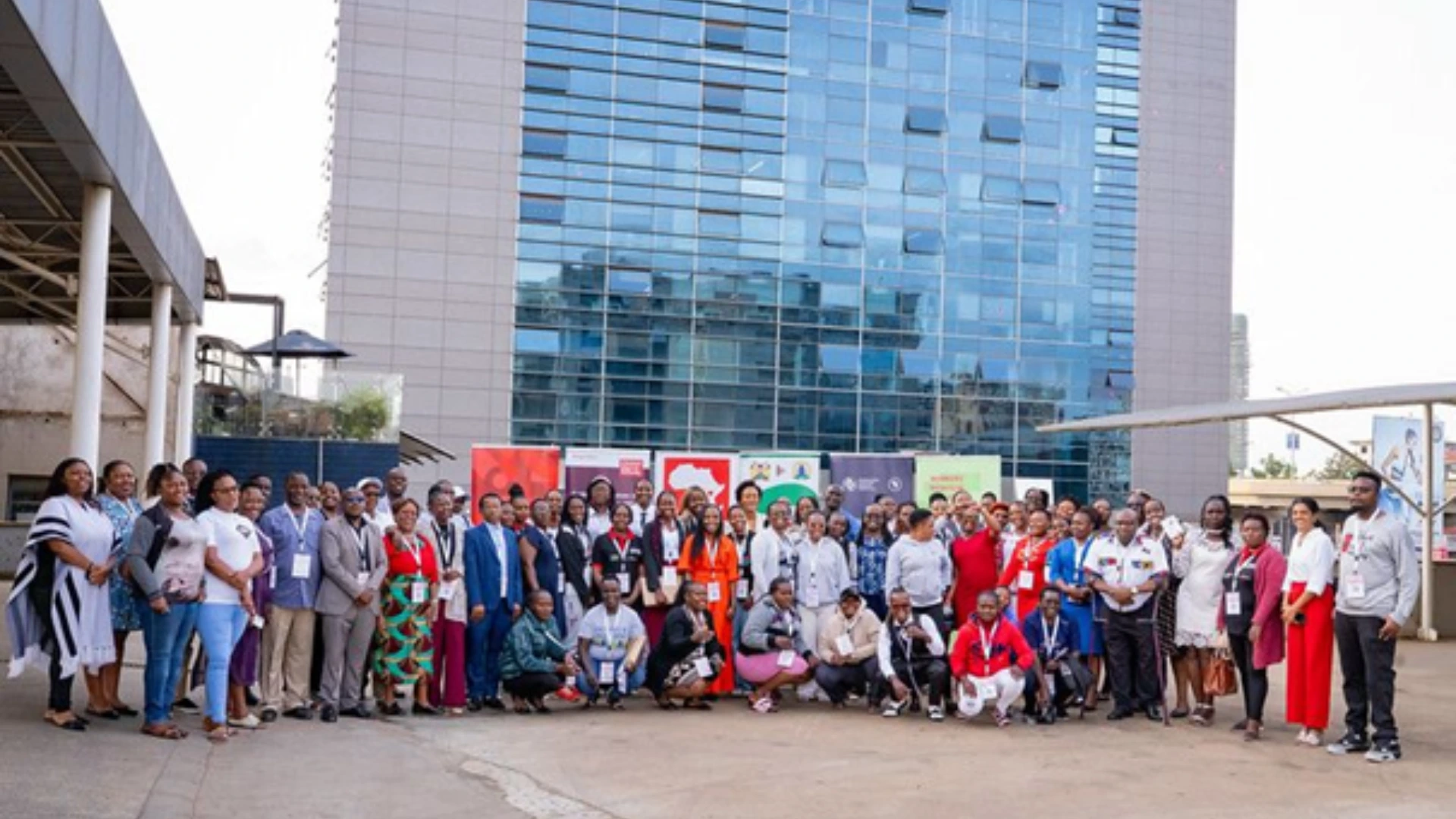
Stakeholders group photo at the WTA Conference in Nairobi
A Platform for Transformative Conversations
Held at the Aspire Centre in Westlands, Nairobi, the WTA Conference 2025 united voices across sectors to interrogate longstanding structural barriers that limit women’s participation in transport as users, leaders, and entrepreneurs. Over three days of keynotes, panel discussions, breakout sessions, and networking opportunities, participants explored how transport systems can be more equitable, safe, and inclusive for all. Women and Transport Africa+1
A central theme of the discussions was affordability and access. Panelists acknowledged that transport poverty disproportionately affects women, especially regarding access to products like bicycles, e-mobility options, and public buses. While affordability is often framed as a gender issue, speakers highlighted that it intersects with broader economic and systemic barriers. For many women, even when financing options exist, uptake remains low due to cultural norms, risk perception, and gaps in confidence or skills. These lived realities vary widely across regions from communities where women readily embrace bicycles to others where cultural barriers remain high.
“We want more women to have access to the products, but the challenge starts from a financing aspect. From a data point of view, only about 4% of our total portfolio represents women and even then, many are not active users,” said one speaker.
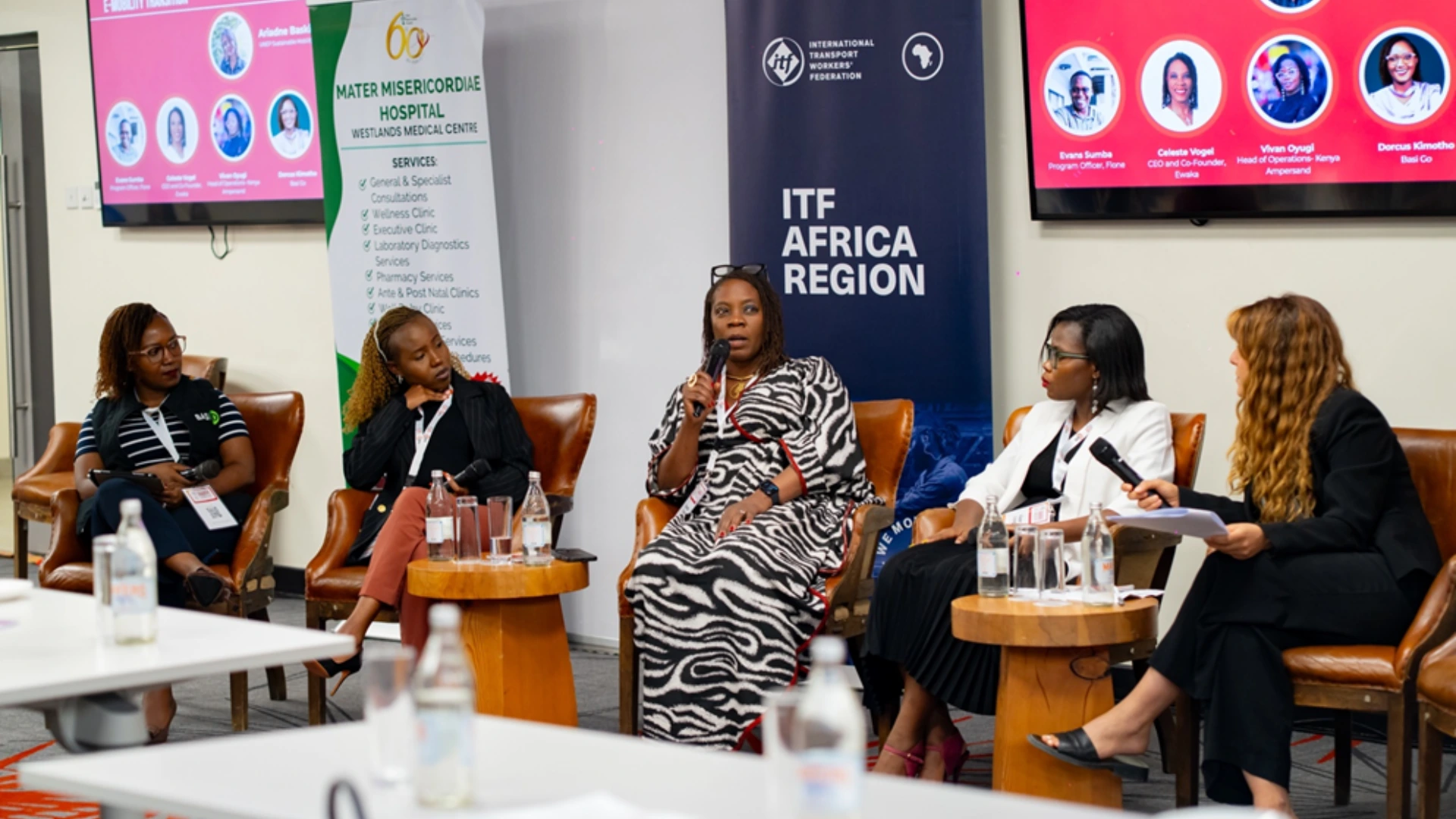
Panel Discussion on women in E-mobility: From left, Dorcus Kimotho – Basi Go,Wendi Sigey-Ebee, Celeste Vogel-CEO and Co-founder Ewaka, Vivan Oyugi-Ampersand and Ariadne Baskin- UN Environment
Designing Transport with Women in Mind
A recurring insight from the conference was that women’s participation in e-mobility is shaped not only by affordability, but by how transport systems are designed, financed, and experienced in everyday life. Female leaders from transport and e-mobility enterprises shared candid reflections on the practical barriers women face and the design decisions that could meaningfully address them.
On financing, speakers acknowledged that while affordability affects all users, it often presents a sharper barrier for women. As one panelist noted, “We want more women to have access to the product, but the challenge starts from a financing aspect of things.” High upfront deposits and rigid repayment structures frequently exclude women, particularly those operating in informal or unpredictable income environments. In response, some companies have introduced flexible financing models, including pay-as-you-drive systems that allow users to make smaller, incremental payments tied to usage. Yet even these innovations face limits. One speaker observed that “the moment women get access to the product, they are not always the users, they are the owner on paper, but not interacting with that product day to day.” This highlights how financing solutions must be paired with broader efforts to address confidence, skills, and social norms.
Vehicle and service design emerged as another critical factor influencing uptake. Several panelists acknowledged that many transport products are not built with women in mind. As one contributor put it plainly, “Some of the system is not designed and is not friendly to women.” Examples of more inclusive approaches included electric bicycles with lower frames that make mounting easier, buses with more spacious seating, and service models that emphasise predictable routes and schedules. Predictability was repeatedly cited as essential, particularly for women juggling paid work and caregiving responsibilities. Without it, mobility becomes both inefficient and unsafe.
Safety and dignity were described as non-negotiable foundations for women’s participation in transport systems. Panelists emphasised that fears of harassment and gender-based violence continue to shape women’s mobility choices. As one speaker remarked, “Women will not use systems that require them to constantly negotiate risk.” Discussions extended beyond vehicles to the wider ecosystem, including well-lit terminals, charging and battery-swapping stations located in spaces where women feel secure, and training for drivers and staff to promote respectful conduct. Participants agreed that safety must be intentionally designed into systems, rather than treated as an afterthought.
Crucially, the conversation reframed gender-responsive transport as a strategic opportunity, not a moral obligation. As one panelist asserted, “We don’t treat gender inclusion as a tick-box exercise, it’s a strategic advantage.” With women accounting for roughly half the population but only a small fraction of the transport workforce and user base, exclusion represents a significant loss of talent, insight, and market potential. Another speaker underscored the importance of representation in leadership and decision-making, noting that “if you have women at the table when decisions are being made, the end result is a product that works better for everyone.”
Taken together, these discussions underscored that designing transport with women in mind requires rethinking financing, products, services, and governance as interconnected systems. When women’s experiences are integrated into design and leadership, e-mobility solutions become not only more inclusive, but more innovative, resilient, and commercially viable, laying the foundation for transport systems that truly serve diverse African realities.
Across the panels, speakers emphasised that women’s engagement with transport is shaped by local context, from rural Kenya to major urban centres. While many women show interest in adopting bicycles and e-mobility solutions, uptake remains uneven due to cultural norms, limited access to finance, safety concerns, and persistent perceptions about gender-appropriate roles.
As one panelist cautioned:“Some of the system is not designed and is not friendly to women. As we talk about e-mobility as an opportunity, we should be very careful not to electrify unequal systems.”
Participants called for a holistic approach that combines skills development, awareness raising, mentorship, and enabling policy and safety frameworks. They noted that predictable working hours, safe operating environments, and targeted financing could make transport roles more accessible and sustainable for women.
There was also a strong call to embed women across the entire transport value chain, from design and leadership to service delivery and policy, recognising that representation matters in shaping systems that work for diverse users.
Moving Forward: Towards Inclusive Mobility
The Women & Transport Africa Conference 2025 wasn’t just a conversation , it was a call to action. It highlighted that while progress has been made, there is still much work to do to ensure transport systems are equitable, gender-responsive, and sustainable. By amplifying women’s voices, supporting women-led enterprises like those emerging in Kenya’s e-mobility sector, and fostering partnerships across government, business, and civil society, Africa can chart a more inclusive mobility future.