
By Monroe Ouma, Betty Mohe and Peter Ongalo
“AI will not replace climate communicators, but communicators who use AI will replace those who do not.” – Enoch Kwame Tham-Agyekum, an Agricultural & Development Communicator.
Across Africa, communities have long relied on trusted sources of climate knowledge to guide their decisions. Will the rain come on time? When should we plant? Where will our livestock find pasture during the dry season? For generations, around evening firesides, elders have presented answers to these climate and agricultural questions, while extension officers and radio broadcasts have shared seasonal weather forecasts that shape farming, livestock management, and daily life. Today, climate change is making these decisions more complex and urgent, which brings a realisation that while these traditions remain invaluable, they are no longer enough on their own. Artificial Intelligence (AI) is coming out as a strong new partner by extending the reach of trusted climate and agricultural knowledge and delivering timely information tailored to local needs.
Climate communication is more than simply sharing information. It is about helping people understand climate change, adapt to its impacts, and make informed decisions that strengthen resilience. As climate risks intensify across Africa, communicating the right information at the right time has never been more important. Today, artificial intelligence (AI) is extending the reach of trusted climate-related knowledge, making it more accessible, faster, and increasingly tailored to local needs. AI is transforming how this climate communication is created, delivered, and understood. Growing evidence shows that AI-driven advisory services are helping agriculture move from reactive crisis management to proactive, informed decision-making.
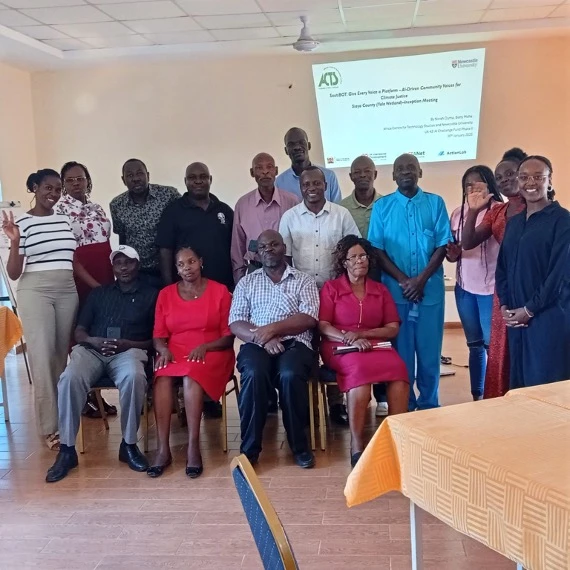
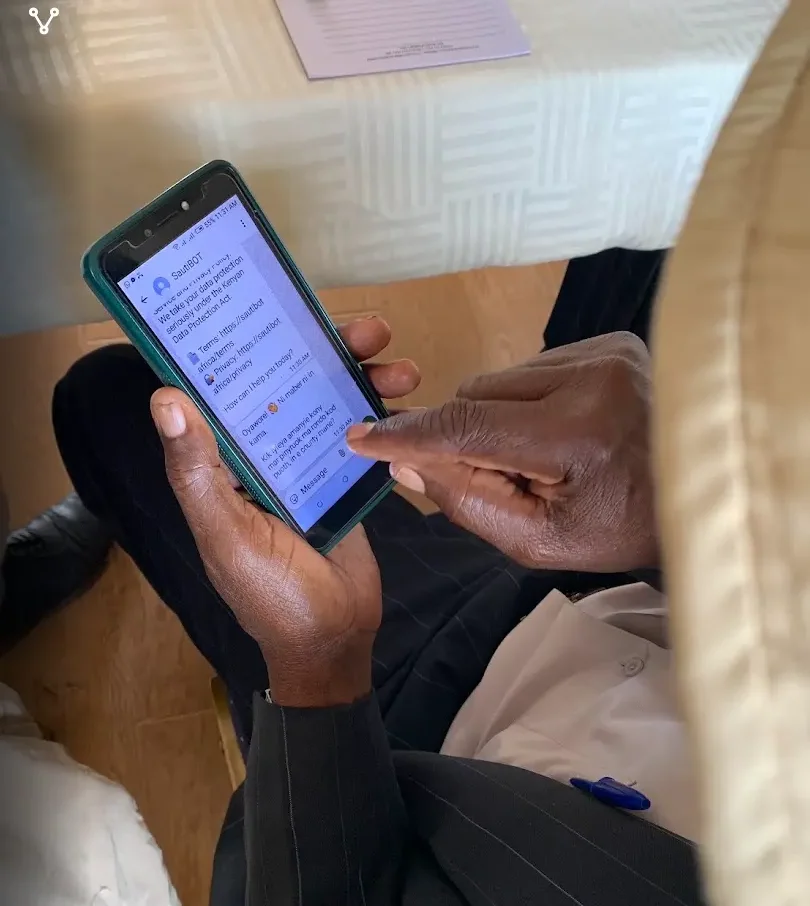
One novel example of this transformation is SautiBOT Africa, an AI-powered multilingual platform developed by the African Centre for Technology Studies (ACTS). Rather than replacing local expertise, SautiBOT captures indigenous climate knowledge from communities through familiar channels such as SMS, USSD, and WhatsApp, integrates it with scientific climate information, and translates the combined insights into practical recommendations delivered on a policy dashboard. By enabling communication in local languages and using technologies already in people’s hands, SautiBOT Africa helps bridge the gap between climate science and everyday decision-making for farmers in Siaya and Kwale Counties.
SautiBOT Africa community validation session


SautiBOT illustrates a much broader transformation already underway. Across the world, AI is reshaping how climate information is generated, interpreted, and communicated. With AI, patterns are identified, forecasts are generated, and recommendations are delivered at a speed and scale that traditional systems cannot match. For climate action, AI-powered models can forecast rainfall, predict droughts, floods, and heatwaves, and issue early warnings before disasters occur. Towards risk and disaster response, AI-powered intelligent advisory systems can generate location-specific recommendations based on weather, soil conditions, and crop requirements. AI-powered translation technologies are also breaking language barriers that have long prevented many communities from accessing climate information, making scientific knowledge available in the languages people use every day.
Yet technology alone cannot solve the climate communication challenge. AI is only as reliable as the data, governance, and people behind it. While it can accelerate access to knowledge, it can also amplify misinformation, bias, or inaccuracies when used irresponsibly. This makes human oversight, transparency, and evidence-based verification more important than ever. Farmers are more likely to trust and act on information when scientific forecasts complement indigenous knowledge. Rather than replacing local knowledge, AI should strengthen it. The future of climate communication lies in bringing these two sources of knowledge together so that technology enhances, rather than overshadows, the experience communities have built over generations.
Despite its enormous potential, AI also presents challenges. The same technologies that spread accurate information can also accelerate the spread of misinformation. AI-generated content may contain factual errors, bias, or fabricated information if it is not carefully reviewed. For researchers and communicators, transparency and verification are therefore essential. AI should support evidence-based communication, not replace critical thinking, professional judgement, or ethical responsibility. The way forward is neither to fear AI nor to embrace it without question. It is to use it responsibly. Governments, research institutions, civil society organizations, and communicators must invest not only in AI technologies but also in the skills, ethical standards, and governance needed to use them effectively. Building public trust will depend on transparency, accountability, and meaningful human oversight.
The future of climate communication is not a choice between indigenous knowledge and artificial intelligence. It is about bringing them together.
Just as evening firesides once connected communities through shared wisdom, today’s digital platforms can connect millions with timely, localized, and actionable climate information. By combining centuries of indigenous experience with the speed and scale of AI, Africa has an opportunity to build more resilient communities, strengthen climate adaptation, and ensure that no one is left behind in the transition to a climate-smart future.
Call to Action
As AI reshapes climate action, the ability to use these tools responsibly is becoming an essential skill. The ACTS Pathways Academy, through its 2026 Seasonal School, themed “Artificial Intelligence for Climate Action,” responds to this by aiming to equip individuals with practical skills in ethical AI, prompting, climate communication, and AI-powered research and decision-making. Together, we can ensure that the future of climate communication is rooted in both human wisdom and intelligent technology.
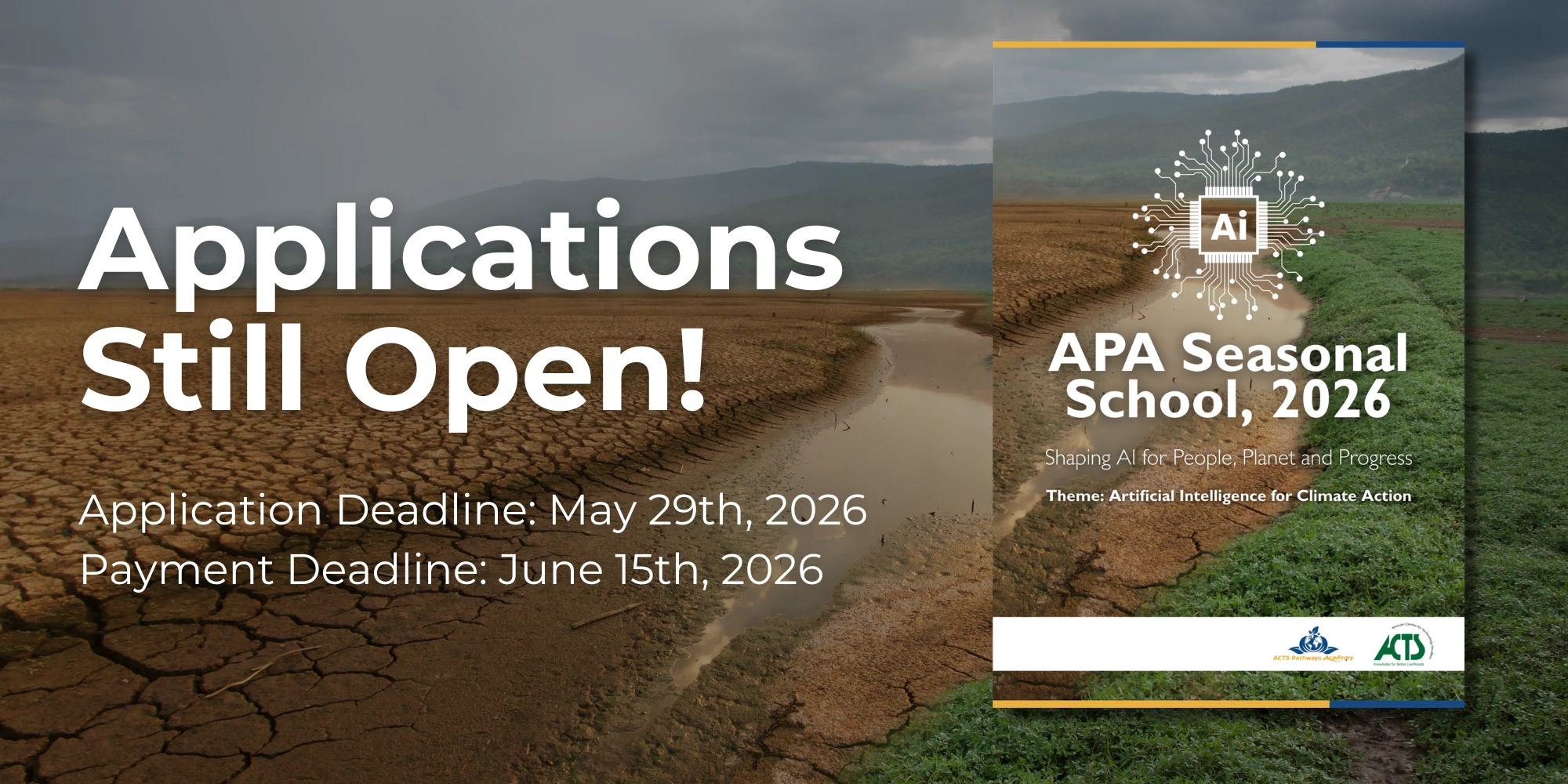
APA Seasonal School 2026: Shaping AI for People, Planet and Progress